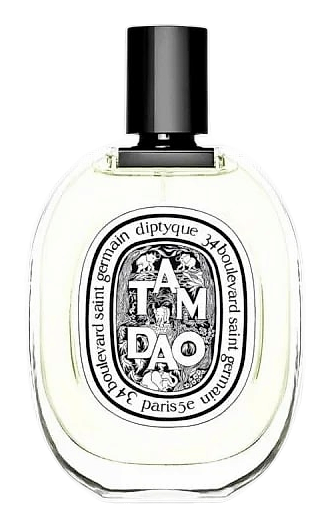

The Story
Why it exists.
The beginning
Tam Dao emerged in 2003 under perfumer Daniel Molière, named for a mountainous region in Vietnam known for its ancient forests and the sandalwood trees that grow there. The brief was simple on paper: translate a memory of dense, humid woodland into something wearable. Molière didn't reach for the obvious tropical references, no coconut, no ylang weighed down by sweetness. Instead, the fragrance captures the cooler air at the forest's edge, the shade beneath the canopy, the way light filters through leaves rather than blazing down. It was Diptyque's answer to a question nobody had quite asked yet: what does a sacred forest smell like when it becomes something you carry with you?
What makes Tam Dao unusual is the restraint. Sandalwood fragrances often lean either clinical (sandalwood as a clean base note) or indulgent (sandalwood drowning in cream and vanilla). Here, the Mysore sandalwood arrives already in conversation, cedars dry it out, myrtle cools it, cypress adds an aromatic green that keeps the whole thing from sitting still. The result isn't a linear sandalwood scent. It's a composition where the wood is always changing because the other materials keep pressing against it. That tension is what gives Tam Dao its longevity: it doesn't plateau because nothing in it stays still long enough to settle.
The evolution
The opening hits quick, myrtle and cypress arriving together like a door opening into shade. There's a brief green medicinal moment (not unpleasant, just present) before the sandalwood begins to assert itself. By the thirty-minute mark, the wood has taken over and the heart notes start their slow reveal: cedar first, adding structure and a faint dustiness, then myrtle reappearing like a supporting voice that never fully leaves the conversation. The drydown is where Tam Dao earns its reputation. Hours later, on skin that runs warm, the sandalwood has softened into something close to skin itself, not projection, but presence. A hint of amber from the EDT formulation keeps it from going cold. On fabric, it lingers into the next day, faint and clean, like the memory of a place rather than the place itself.
Cultural impact
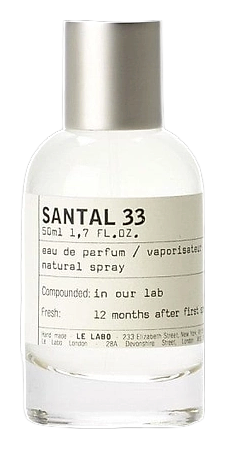
Tam Dao occupies a specific corner of niche fragrance culture, the one for people who've been wearing scent long enough to want something that doesn't announce itself. It's been in the Diptyque lineup since 2003 without ever becoming a bestseller or a cult phenomenon in the obvious way. Instead, it circulates quietly among people who know, recommended by those who've worn it for years and see no reason to switch. It's the fragrance that fragrance people mention when someone asks what to buy after they think they want Santal 33.