The Story
Why it exists.
The beginning
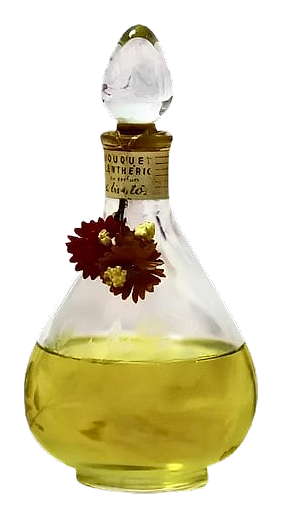
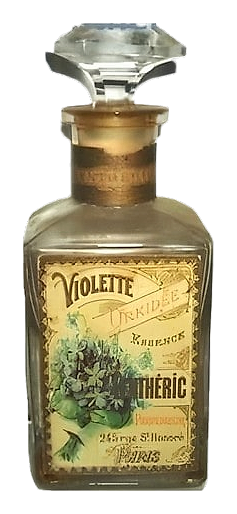
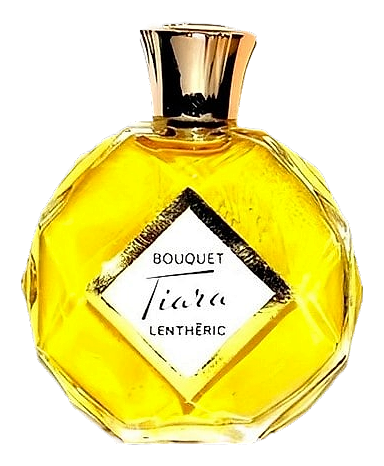
Bouquet Tiara arrived in 1911, a moment when floral perfumery was finding its bottled voice and houses treated scent as a finishing touch as deliberate as any accessory. A fragrance bearing the name Tiara promised exactly that: something worn, something crowned, something meant to sit close and be remembered. Bouquet Tiara took the floral language of its era and packed it into a single flacon. It belongs to that first generation of perfumes built not for a single client but for a generation of women who expected their fragrance to behave like jewelry: present, personal, and impossible to mistake for anyone else's. The composition leans into the powdery softness and synthetic brightness that defined early twentieth-century florals, treating those qualities as features rather than flaws.
What makes Bouquet Tiara worth a second look is how it refuses to behave like a modern floral. The accords read powdery and synthetic by current standards, which is exactly the point. Early twentieth-century compositions carried a soapy, almost ceramic lift that gave florals a clean, finished quality, and Bouquet Tiara wears that quality without apology. The sweetness is structural, not gourmand. The florals don't bloom so much as press themselves flat into a keepsake, each note offering a soft register rather than a solo.
The evolution
The opening is the brightest the scent will ever be. A bright, slightly metallic lift cuts across the first moments, the way fresh air moves through a perfumed parlor before anyone has spoken. Citrus sweetness sits underneath, brief and polite, before the florals begin to gather at the edges. There is nothing shy about this opening. The composition pulls inward as it develops, the brightness softening into a settled hush. The heart arrives as a dense powdery cloud, cool and pressed, like petals flattened in a book left on a windowsill. Violet and rose thread through a soapy orris-type softness, and the synthetic backbone that defines vintage florals becomes more apparent here, not as a flaw but as the era's signature. Past this point the powder dominates. Musk and a sweet amber base hold the shape without adding warmth, and the trail softens into something quieter and more personal.
Cultural impact
Bouquet Tiara by Lentheric stands as a fragrant echo of early twentieth-century perfumery, a period when floral compositions were treated as personal finishing touches rather than bold statements. Launched in 1911, it entered a market that still associated fine fragrance with gloves, pearls, and Sunday best, and it carried that ceremonial poise into every facet of its composition. The powdery, synthetic character that defines the fragrance places it in conversation with other florals of its moment, yet its warmer base and gentler sillage give it a distinctly domestic quality.