
The Story
Why it exists.
The beginning
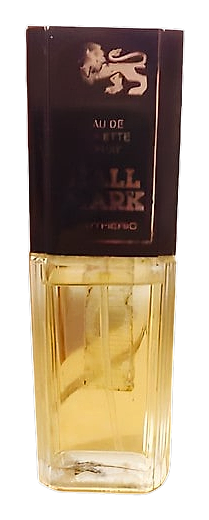
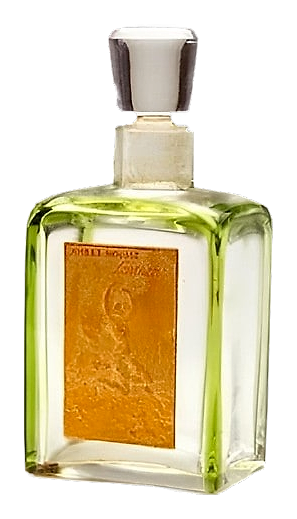
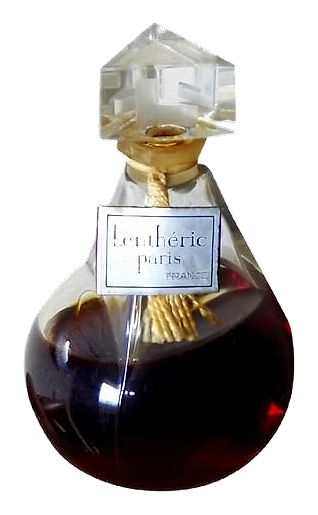
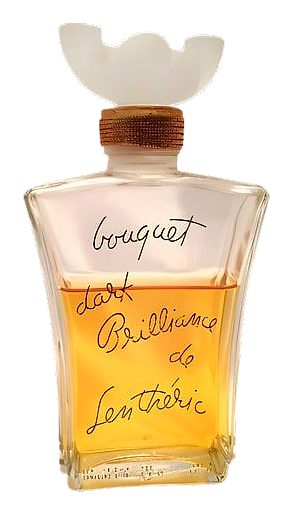
Dark Brilliance arrived in 1946, and it lands as a statement composition from Lentheric. The bottle design went to Frank McIntosh, who shaped a flacon that holds its posture like a bar of cut glass. Nothing about the release whispers. The construction is dense, the materials feel expensive, and the overall impression is of a fragrance built for a woman who walks into a room knowing it will notice. The combination of aldehydes, rich florals, and a heavy resinous base suggests something intended to last through a long evening and into the next morning. There is a deliberate weight to the juice, both in the bottle and in how it wears. This is vintage French perfumery at full volume, the kind of release that commits completely to its own character rather than chasing trends of the moment.
The composition reads as a spicy-resinous floral with serious depth, anchored by oakmoss and patchouli in the base, while the middle stage refuses to behave like a polite bouquet. Carnation and cinnamon do the talking through the heart, lending a clove-spiced heat that pushes tuberose and gardenia away from their usual bridal sweetness and toward something spicier, far more assertive. Aldehydes in the opening give the first five minutes a sharp, lacquered brightness, the sort of crackle that vintage French perfumery wore as a signature.
The evolution
The aldehydes hit first, almost metallic, like a struck match. Bergamot softens the edges quickly, and for the first ten minutes the fragrance reads bright, clean, almost bracing. Then the carnation and cinnamon arrive together, and the temperature shifts. Tuberose and gardenia thicken the middle, but it is the spice that dominates, warm and slightly sweet, the way clove-scented air feels at the edge of a crowded room. Two hours in, the florals have settled into the base, and the heavier architecture shows itself. Oakmoss, patchouli, and sandalwood take over, with benzoin and myrrh lending a resinous incense warmth that feels closer to a church than a boudoir. The civet and castoreum do what animalic notes do best: they make the drydown feel alive on skin, slightly damp, slightly furry, as if the perfume is still breathing.
Cultural impact
Wearers reach for Dark Brilliance when they want something dense, mossy, slightly animalic, and unmistakably French on the skin. One reviewer famously described it as 'Not the little black dress, but the big one,' a line that captures the weight and presence of the composition. It sits comfortably in the lineage of aldehydic florals that defined the era, a generation of perfumery built on layered spice, heavy florals, and base notes with real grip. The apparently discontinued status has made it harder to find, and that scarcity only adds to its appeal among collectors who treat vintage releases as objects worth seeking out.