The Story
Why it exists.
The beginning
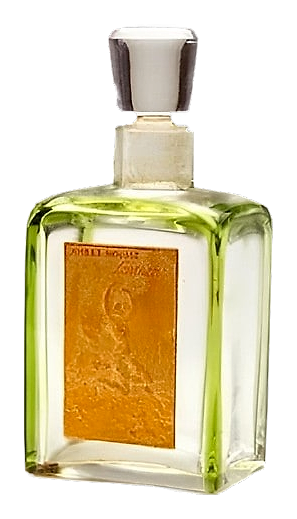
Lentheric introduced À Bientot in 1930. The name itself is a French farewell, à bientôt, meaning 'see you soon.' The phrase turns a parting into a promise, suggesting the fragrance was conceived as a final impression, the scent you leave behind in a room, on a sleeve, in someone's memory. A fragrance designed around the idea of departure carries an unusual charge: you wear it knowing someone will inhale its last whispers after you've gone. There's an intimacy built into that concept, a quiet flirtation with absence that gives the composition its particular gravity. The house released this composition during a period when its women's fragrances were earning attention for their refined character, and À Bientot arrived as part of that lineage.
What makes À Bientot distinctive is the way it balances aldehydic brilliance at the top with a warm, resinous-spiced heart beneath. The opening sparkle gives way to a green-spiced warmth, then settles into an amber-wood base that never loses its composure. The accords, listed as green, spicy, woody, chypre, and floral, place it in a tradition of structured French perfumery that valued restraint over spectacle.
The evolution
À Bientot opens with a bright aldehyde lift, almost fizzy, layered over soft floral notes that read as fresh and slightly green. The aldehydes do their work in the first 20 minutes: sparkling, clean, a touch sharp, like the surface crackle of a just-poured glass of something cold. Underneath, there's a warmth already building, a quiet resinous hum that the aldehydes can't quite mask. By the 30-minute mark, the composition shifts. The sparkle softens, the green notes deepen, and the oriental and resinous heart comes forward: warm, slightly sweet, with a spiced edge that suggests amber resin and the kind of dry, warm spice that lingers on wool. This middle phase lasts several hours, sitting close to the skin, well-groomed and understated. Around the 4-hour mark, the base begins to emerge.
Cultural impact
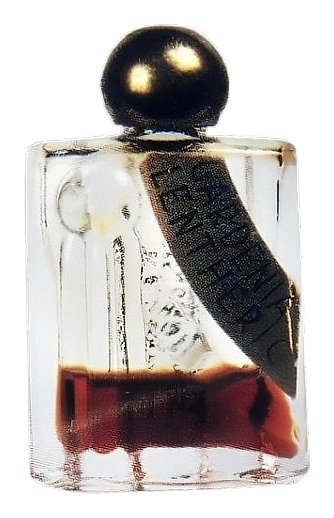
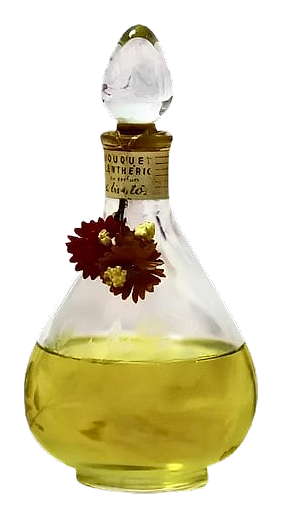
À Bientot holds a particular place in fragrance history as a 1930s aldehyde composition with a distinctive green-spicy character. Today it's a collector's piece, the kind of release that vintage fragrance enthusiasts seek out for its historical placement and its particular composition. The green-spicy accord gives it a character that's immediately recognizable to those familiar with the era, and its presentation in Baccarat crystal adds another layer of desirability for collectors who value the complete package: fragrance, bottle, and provenance.