
The Story
Why it exists.
The beginning
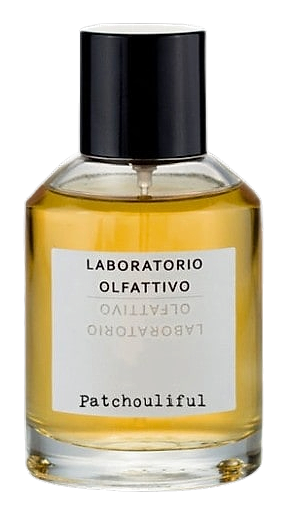
The name came first. In Urban Dictionary, 'patchouliful' means more than beautiful, the kind of descriptor that stops you mid-scroll. Cécile Zarokian took that idea and built a fragrance around it: patchouli at its most regal, its most assured, but dressed for comfort rather than ceremony. The king in the brand's imagery wears a crown, a flowery shirt, a pareo, and flip-flops. That image captures the entire brief.
What makes Patchouliful distinctive isn't the patchouli itself, it's the company it keeps. Frangipani and iris push against the earthy, camphoraceous character that usually defines the material. The contrast creates something that reads warmer, more floral, less brooding than a traditional patchouli composition. Cedar and labdanum in the base keep it grounded without dragging it down into soil and smoke.
The evolution
The opening announces itself immediately, clove and cinnamon arrive together, sharp and unapologetic, with bergamot doing the work of keeping the spice from overwhelming the room. This phase lasts maybe twenty minutes on most skin, longer if you're patient with it. Then the handoff begins. The spice recedes not dramatically but gracefully, like a door slowly closing on a loud room. Patchouli rises to take its place, but the frangipani softens the landing, this is where the floral heart earns its name. The iris adds powder without making the composition feel dated. By hour three, you're in different territory entirely. Cedar and musk have taken over, the labdanum adding a resinous warmth that stays close to the skin. Moderate sillage, meaning the people closest to you know you've worn it. By hour eight, what's left is warm, woody, intimate, the ghost of something that kept changing all day.
Cultural impact
Patchouliful occupies an interesting position in the niche patchouli landscape. It appeals to people who want the depth of patchouli but find traditional interpretations too earthy or polarizing. The bright, refined character sets it apart from darker, more animalic interpretations that dominate the category.
The House
Laboratorio OlfattivoLaboratorio Olfattivo is an independent Italian niche house founded in Rome in 2009 by creative director Roberto Drago and business partner Daniela Caon. The house operates as a creative platform, collaborating with perfume craftsmen who work autonomously under the Laboratorio Olfattivo name rather than operating through an in-house perfumer. Each fragrance exists as its own standalone work, not part of a numbered collection. The house is recognizable by a characteristic dark amber, vetiver, and resin signature anchored by a consistent base structure across releases. Arancia Rossa stands out as a vivid, saturated blood-orange perfume built over that warm amber-vetiver foundation. The catalog spans orientals with deep burnished woods and resins alongside brighter citrus compositions. The output is deliberately unhurried, with one to three new fragrances arriving most years, and the two founders remain the sole creative force behind the label. Roberto's family background runs through the Italian perfume trade, reportedly through his father Luigi Drago's work running a perfume distribution house. By contrast, Laboratorio Olfattivo itself has never sought outside investment, remaining entirely founder-owned and operated. The self-funded structure means完全没有外部资金压力,创意方向不受投资者期望驱动。This shape shifting has translated into a genuine point of view that longtime followers recognize in the catalog. The founding story holds particular interest within the niche fragrance community because the label avoids the conventional channels of beauty entrepreneurism. There is no private label background, no pivot from cosmetics, and no celebrity angle. Instead, a distribution professional and a marketing executive with a shared passion built something from scratch in Rome and held to it for over a decade. The name Laboratorio Olfattivo translates roughly to olfactory laboratory. It signals that the house is understood as a working studio for assembling aromatic materials rather than a heritage brand performing its own mythology. The founder-driven ethos has also meant that the house has remained genuinely small in team size, operating with a long-term perspective rather than chasing market relevance. Every creative decision filters through the two founders, contributing to a catalog that feels internally motivated rather than assembled by committee.
The Creator
Cécile ZarokianCécile's style is often described as sophisticated and refined, with a touch of unexpected boldness. She's not afraid to experiment with contrasting accords, juxtaposing familiar notes with unusual elements to create surprising and memorable effects.