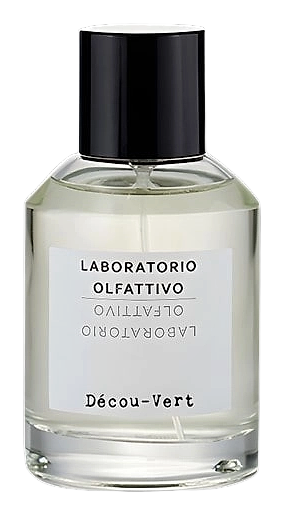

The Story
Why it exists.
The beginning
Décou-Vert arrived in 2012 from David Maruitte, tasked with an unusual ambition: reconcile three fragrance families typically kept apart. Flowery notes. Vegetable notes. Green. The brief was almost philosophical, what happens when you stop treating these as opposites and start layering them as equals? Maruitte chose magnolia as the axis, a flower that exists between fruity and creamy, sweet and green. Then he built outward from there, using green leaves not as an accent but as a container for everything that follows. The name itself suggests something uncovered or decoded, lifting a blind frame to find color where you expected none.
What makes Décou-Vert structurally interesting is the relationship between magnolia pollen and green leaves. Magnolia pollen is rarely used as a named note, it's more commonly folded into a general "floral" accord. Here it's listed explicitly, and the green leaves serve a dual function: they open the composition and they persist underneath, giving the floral layers something to rest against rather than float in. The result is a white floral that doesn't behave like one. No indolic creaminess. No heady jasmine overdose. Just magnolia, lilac, and jasmine held in place by something cool and vegetable.
The evolution
The opening hits green first, not the sharp citrus-green of grapefruit or the mentholated green of mint, but something leafier. Dew on stems. Cut stems. This lasts about twenty minutes before the florals begin their slow emergence. Lily of the valley appears first, brief and cool, then jasmine and lilac layer in, with magnolia pollen giving them a slightly waxy, slightly sweet anchor. The green doesn't fade so much as recede, it becomes the structure underneath, still present, still holding things up. By hour three, the musk and woody base notes arrive, and the fragrance settles into something quiet and close to the skin. Moderate sillage throughout. The drydown on clothing, if you spray on fabric, lasts into the next day, faint and clean, like sheets dried on an open window.
Cultural impact
Décou-Vert arrives at a moment when perfumery is rediscovering the elegance of restraint. Green fragrances have cycled through popularity waves, but this creation taps into something more enduring: the universal appeal of fresh, unadorned nature captured in a bottle. The emphasis on lily of the valley and crisp green notes reflects a broader cultural movement toward authenticity in scent, where wearers seek fragrances that feel personal rather than performative. Laboratorio Olfattivo, as a niche house, positions this scent within a tradition of Italian perfumery that values artistry over commercial appeal. The name itself, evoking the act of discovering green spaces, speaks to contemporary desires for calm, natural moments in increasingly digital lives.
The House
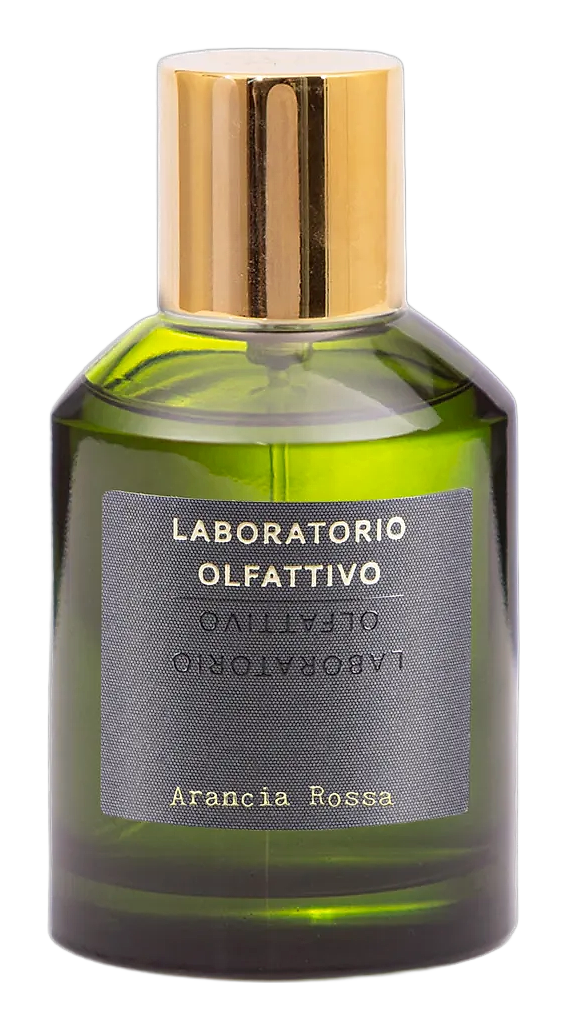
Laboratorio OlfattivoLaboratorio Olfattivo is an independent Italian niche house founded in Rome in 2009 by creative director Roberto Drago and business partner Daniela Caon. The house operates as a creative platform, collaborating with perfume craftsmen who work autonomously under the Laboratorio Olfattivo name rather than operating through an in-house perfumer. Each fragrance exists as its own standalone work, not part of a numbered collection. The house is recognizable by a characteristic dark amber, vetiver, and resin signature anchored by a consistent base structure across releases. Arancia Rossa stands out as a vivid, saturated blood-orange perfume built over that warm amber-vetiver foundation. The catalog spans orientals with deep burnished woods and resins alongside brighter citrus compositions. The output is deliberately unhurried, with one to three new fragrances arriving most years, and the two founders remain the sole creative force behind the label. Roberto's family background runs through the Italian perfume trade, reportedly through his father Luigi Drago's work running a perfume distribution house. By contrast, Laboratorio Olfattivo itself has never sought outside investment, remaining entirely founder-owned and operated. The self-funded structure means完全没有外部资金压力,创意方向不受投资者期望驱动。This shape shifting has translated into a genuine point of view that longtime followers recognize in the catalog. The founding story holds particular interest within the niche fragrance community because the label avoids the conventional channels of beauty entrepreneurism. There is no private label background, no pivot from cosmetics, and no celebrity angle. Instead, a distribution professional and a marketing executive with a shared passion built something from scratch in Rome and held to it for over a decade. The name Laboratorio Olfattivo translates roughly to olfactory laboratory. It signals that the house is understood as a working studio for assembling aromatic materials rather than a heritage brand performing its own mythology. The founder-driven ethos has also meant that the house has remained genuinely small in team size, operating with a long-term perspective rather than chasing market relevance. Every creative decision filters through the two founders, contributing to a catalog that feels internally motivated rather than assembled by committee.
The Creator
David MaruitteMaruitte favors a clean, linear architecture that lets key ingredients shine. He reaches for synthetics such as Ambrocenide to add a crisp, green edge, then layers natural extracts that echo the same motif.