The Story
Why it exists.
The beginning
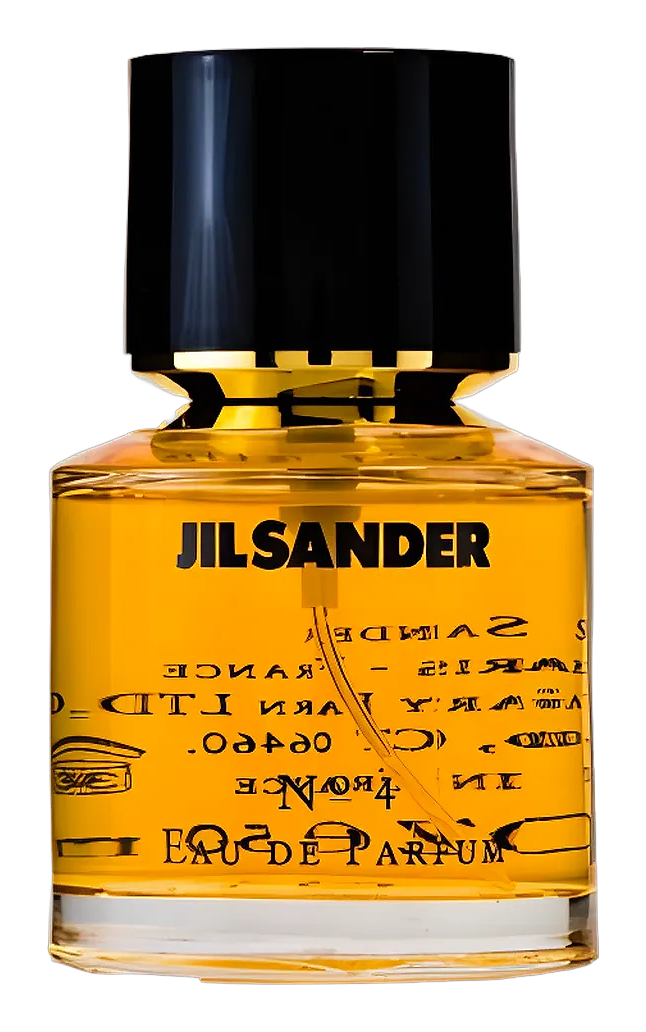
In 1990, Michel Almairac composed Jil Sander No. 4 at a moment when the German house was deepening its fragrance identity. The brand had already released Man I in 1981 and Woman II in 1983, establishing a repertoire for compositions that understood restraint. No. 4 arrived as something more ambitious, a scent that attempted to capture the full complexity of the Jil Sander woman without sacrificing the clarity that defined the house aesthetic. Almairac chose to begin with green galbanum and tart plum, a departure from the softer openings common in late-1980s feminine fragrances, signaling that Jil Sander intended to occupy different territory.
The note structure reveals a deliberate philosophy of contrast. The sharp green opening gives way to rich florals, which then resolve into warm woods and vanillic comfort. This arc mirrors the Jil Sander approach to fashion itself: structured beginnings, expressive middles, and refined conclusions. The inclusion of civet and oakmoss reflects the era's embrace of animalic complexity, while sandalwood and vanilla ensure the composition remains wearable rather than merely challenging. Star anise and tarragon add unexpected spice notes that prevent the composition from feeling predictable, demonstrating Almairac's understanding that even traditional florals benefit from structural tension.
The evolution
The opening burst of galbanum, plum, and bergamot establishes immediate tension, a green-fruity sharpness that feels almost confrontational. As this settles, the heart blooms with remarkable intensity, tuberose and ylang-ylang asserting themselves with the confidence typical of the era's blockbuster florals. Carnation and nutmeg add spice while tarragon introduces an herbal quality that keeps the florals from becoming purely sweet. The myrrh and rose provide depth, bridging toward a drydown where civet, sandalwood, and cedarwood create a warm, animalic foundation. Vanilla and tonka bean soften the animalic edges while oakmoss and ambergris lend a mossy, marine complexity that evolves continuously over hours of wear.
Cultural impact
Released in 1990, No. 4 sits within a lineage of 1980s powerhouse feminines that favored opulent floral hearts and animalic bases. The fragrance has maintained a steady following for its unapologetic richness, not the clean modernity of Jil Sander's earlier entries, but a deeper, more complex statement.