The Story
Why it exists.
The beginning
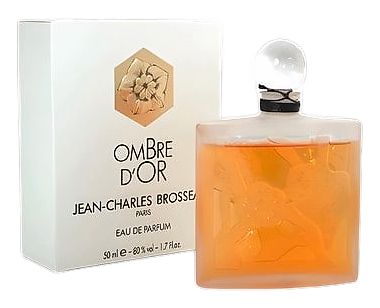
Jean-Charles Brosseau spent decades dressing women on the Paris Left Bank before scent became the final layer of expression. Ombre d'Or arrived in 1994, composed by Nathalie Lorson, a perfumer who understood that restraint could be its own statement. Where other houses chased bold projections and tropical sweetness in the 90s, Brosseau reached for something more personal. Ombre d'Or was built for the woman who already knew what she liked, the yellow florals, the aldehydic lift, the powdery warmth that settles close. Not a crowd-pleaser. A signature.
The name means golden shadow, and that duality lives in every layer. Yellow florals carry warmth, not brightness alone. The aldehydic opening recalls an older French elegance, the kind that smells like powder and light rather than fruit and sweetness. Vetiver and sandalwood anchor the composition to something grounded, while amber and vanilla give it a finish that lingers. This isn't a fragrance that announces itself. It's the one people notice when you're already gone.
The evolution
It opens with a quiet drama. Aldehydes lift bergamot and orange into something that feels like cold air meeting morning sun, that aldehydic brightness is the tell. Green underneath from the bergamot, so it never turns sweet. The hyacinth arrives next, pushing the florals forward: lily of the valley first, then jasmine, then the fuller bloom of peony and rose as the ylang-ylang warms. Around the first hour, it softens. The florals don't disappear, they exhale. Sandalwood and amber arrive quietly, with vetiver holding everything down. The vanilla and musk come last, turning the whole thing powder-soft and close. On most skin, eight to ten hours. The sillage never fills the room, it stays intimate, present only to the people nearby. A fragrance that trusts itself to be found.
Cultural impact
Ombre d'Or occupies a particular corner of 90s perfumery, yellow florals, aldehydic elegance, powdery warmth. It sits comfortably between the house's signature Ombre Rose and the broader oriental tradition. Wearers tend to describe it as the fragrance of someone who didn't need to announce themselves, quiet confidence, worn rather than displayed. It's the kind of composition that earned a devoted following not through boldness but through consistency: eight to ten hours of soft, powdery floral that stays close and lingers. The community skews toward those who've been wearing it for years, which says something about what it offers when it comes to reliability and wearability.