
The Story
Why it exists.
The beginning
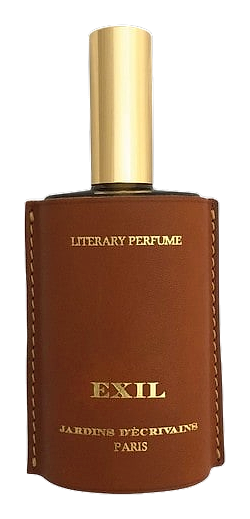
Exil is Jardins d'Ecrivains' literary tribute to Saint-John Perse, the French poet whose verse moves through exile, landscape, and the quiet authority of self-claiming. Anaïs Biguine composed it in 2018, and the perfume carries the poet's declaration as its spine: "I shall inhabit my name." The name itself, Exil, doesn't refer to banishment in the usual sense. In Perse's work, exile is the condition of being deeply rooted wherever you stand. It's about inhabiting identity rather than running from place. Biguine, who composes every formula herself, shaped the composition around cedar, eucalyptus, thyme, clove, amber, heliotrope, and musk.
What makes this composition work is its restraint with heavy materials. Clove and amber share space with eucalyptus and thyme, which cut through that warmth before it settles. Cedar and heliotrope in the base do the same thing at ground level: cedar keeps the woody backbone clean and architectural rather than resinous, and heliotrope's almond-powder softness keeps amber from going syrupy. The result is a composition that knows exactly how much warmth it can hold without losing its herbal clarity.
The evolution
The first 30 minutes are almost entirely eucalyptus and thyme, green and camphoraceous in a way that reads more like forest floor than cologne. Clove enters quietly around the 45-minute mark, warming the herbal top into something spiced and dry, and the amber arrives like a slow exhalation beneath it, bringing a low golden glow that wasn't there a moment ago. By the two-hour mark, the eucalyptus has nearly disappeared and the composition feels like an entirely different scent, warmer, powderier, more intimate. Heliotrope and musk carry the final hours, a soft almond-skin warmth dusted with cedar. Eight hours in, what's left on a sweater sleeve is mostly musk and the ghost of cedar, close and quiet and unmistakably personal.
Cultural impact
Exil wears like a literary reference that doesn't need explaining. The clove-amber-heliotrope axis gives it a warmth that herbal fragrances often lack, and the composition reads as the scent of someone who has read enough to know what they like and isn't performing it. There's a quiet confidence in how the fragrance carries itself: no shouting for attention, no theatrical projection, just a consistent, well-shaped presence on the skin. The opening's eucalyptus-thyme clarity feels distinctly literary, evoking the green quiet of a Mediterranean garden rather than a perfumed salon.