
The Story
Why it exists.
The beginning
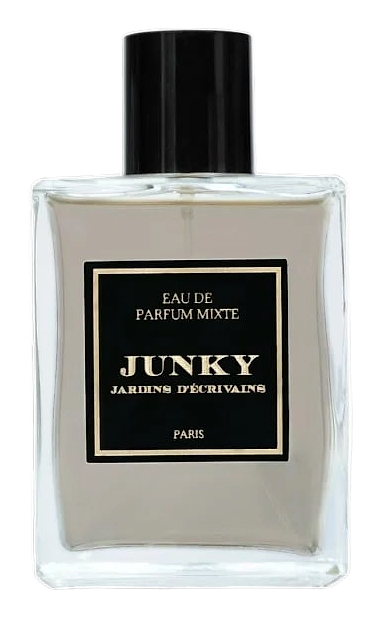
The name arrives loaded. Jardins d'Ecrivains has a literary conceit at its core, and Junky leans into it harder than most. Anaïs Biguine, the perfumer behind the project, built this one in 2014 from a foundation of cannabis and precious wood, words that sound simple until you actually smell what's been done with them. The official line calls it a precise mechanism operating in a freshness of cannabis and precious wood. That's accurate. Also polite. The real reading is a green composition with a sharp edge, something that cuts before it comforts, the kind of scent that earns the name it was given.
Most green fragrances get filed under galbanum and then stop. Junky keeps going. Brazilian rosewood and galbanum open with that snapped-stem sharpness, and hemp does the heavy lifting, adding a vegetal, slightly sweet pull that most compositions sidestep entirely. The heart is unexpected: gardenia, violet, iris, all three deliberately powdery, deliberately composed. They sit against the green opening like someone buttoning their coat in a doorway they've just stepped out of, a moment of composure after the initial blast of green.
The evolution
The first ten minutes belong to galbanum, loud and almost metallic, the green so sharp it reads as cold. Hemp settles underneath quickly, not so much a note as an atmosphere. By thirty minutes the iris has arrived, powdery and slightly sweet, and the green has mellowed into something more botanical than aggressive. This is the heart phase most people remember: gardenia lending a creamy weight, violet adding that grape-skin softness, the whole composition suddenly feeling deliberate and composed. The shift into base happens around the two-hour mark. Cashmeran arrives first, warm and slightly woody, a cashmere touch on bare shoulders. Then frankincense and opoponax trade turns, resinous and sweet, and the cedar and Java vetiver underneath give it all something to stand on. By hour four or five the green is gone entirely. What's left is skin-close amber-warmth with a faint bitter edge from the juniper. On fabric the next morning it reads as a quiet, woody incense. Nothing loud. Nothing green. Just the ghost of a conversation that ended hours ago.
Cultural impact
Junky occupies a strange and specific corner of fragrance. It's a literary fragrance that doesn't lean on the usual markers: no old paper accord, no ink, no dusty library effect. The green-resinous axis, built on galbanum, Brazilian rosewood, hemp, and iris, reads cerebral rather than comforting. People drawn to it tend to want scent that operates beneath notice, works in close quarters, rewards a patient nose. The combination of sharp green opening and powdery floral heart, eventually settling into a warm resinous base, gives the fragrance an unusual shape. It doesn't announce itself from across a room.