The Story
Why it exists.
The beginning
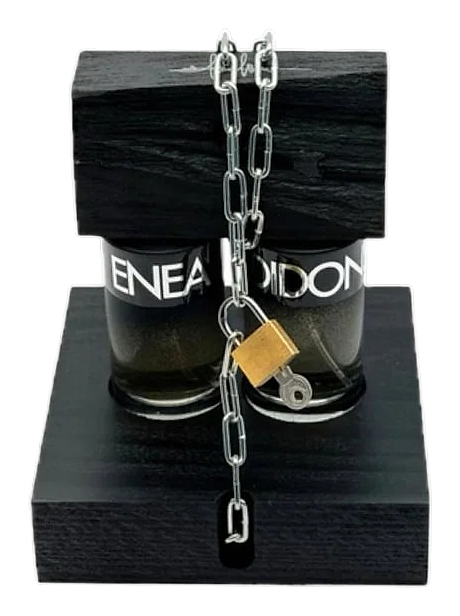
Enea draws its name from Virgil's Aeneas, the wanderer at the center of an ancient epic. The reference is deliberate. Released in 2025 as a limited edition of just 500 bottles, the fragrance was composed for 7Scents perfumery in Budapest. Filippo Sorcinelli built the scent around that journey. Not the violence of it, the smoke and the loss, but the morning after, when the sea still clings to your cloak and the land ahead smells unfamiliar, resinous, spiced with something green. Bay leaf and black pepper at the front, cypress and frankincense at the center, myrrh and cedarwood anchoring the drydown. The shape is that of a long voyage condensed into a single breath: tart, sacred, slightly burnt at the edges.
What sets Enea apart is the restraint of its smokiness. Here, the incense and leather stay transparent, almost meditative, because the top notes refuse to disappear quietly. Bay leaf is treated as a structural element, its bitterness, green and herbal at once, acting as a counterweight to the frankincense and the leather's animal warmth. The result is a composition that smells less like a product and more like a place: a stone chapel at first light, incense still hanging in the air, sea salt on the threshold.
The evolution
The first twenty minutes are the sharpest. Black pepper and bay leaf arrive almost briny, cut by a strange citrus dryness that reads more like peel than fruit. There is nothing soft about this opening. Then the shift. Cypress and frankincense move in like a low cloud, and the leather underneath stops smelling like a jacket and starts smelling like a binding, the inside cover of something old. By the third hour the pepper has faded to a hum, and the myrrh takes over, dense and slightly sweet, the way it does in churches that have been burning it for centuries. Cedarwood arrives last, dry and structural, holding the scent vertical rather than letting it pool.
Cultural impact
With only 500 bottles produced, Enea carries the weight of a limited release, the kind of fragrance that finds collectors who already think of scent as a contemplative medium. Its sacred, resinous character gives it a distinct register, less austere than incense-forward peers, more weathered, carrying the imprint of pilgrimage and slow ritual. The bay-leaf bitterness at the front separates it from the usual procession of churchy resins, lending it a green, herbal edge that feels less like Sunday incense and more like the herbs bundled at a roadside shrine.