
The Story
Why it exists.
The beginning
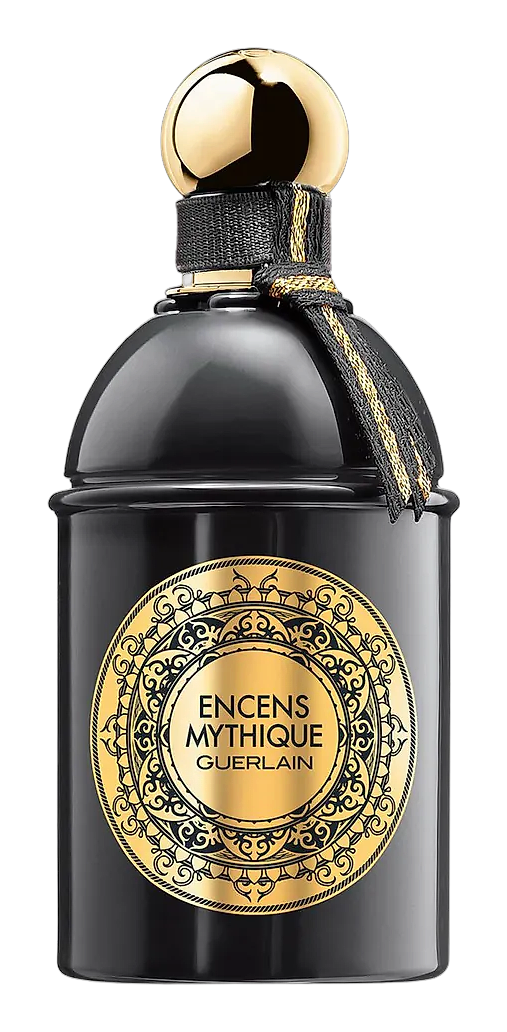
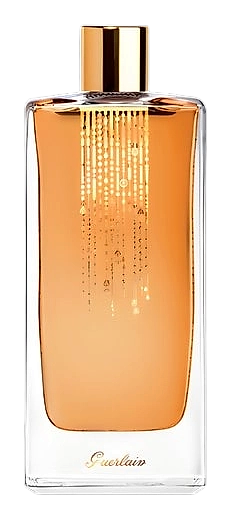
Thierry Wasser designed Encens Mythique d'Orient in 2012 as part of Guerlain's Les Déserts d'Orient collection, a line inspired by the ancient incense routes of the Arabian Peninsula. Frankincense was the brief. What Wasser delivered was Guerlain's answer to it: not a literal interpretation of smoke and church, but something warmer, sweeter, more luminous. The 'Mythique' in the name says everything. This wasn't meant to smell like a desert. It was meant to feel like one.
The composition pairs an aldehydic opening with Persian rose and saffron, then builds toward ambergris and incense in the base. That's the Guerlain move, taking a material rooted in ancient ritual and making it feel like it belongs in the modern world. Patchouli and vetiver ground what could have been purely delicate. Pink pepper adds a subtle spice that keeps the rose from going soft. It's an oriental, yes, but one that doesn't announce itself the way orientals usually do. The aldehydes see to that.
The evolution
The aldehydes don't wait. They hit bright and metallic, shimmering in that particular way they do, almost cold, almost sharp, before the rose arrives to warm things up. Saffron threads through alongside it, adding a leathery sweetness that earns its place. This phase lasts a solid two hours, the rose-saffron-vetiver combination holding steady while the aldehydes slowly recede. Then comes the shift. The rose softens. The saffron deepens. And ambergris takes over the drydown, that animalic, salty, mineral warmth that makes this fragrance worth wearing. Eight to ten hours on most skin. Longer on fabric.
Cultural impact
Since its 2012 debut, Encens Mythique d'Orient has found its audience among those who appreciate Guerlain's classical approach combined with something more modern. The aldehydic structure sets it apart within the house's oriental range, while the ambergris drydown gives it a complexity that rewards patience. It's become a quiet reference point for those who know what they're looking for, distinct from the house's sweeter signatures, more demanding than its approachable flankers.
The House
GuerlainGuerlain stands as one of the oldest and most revered perfume houses in the world, founded in Paris in 1828 by Pierre-François-Pascal Guerlain. What began as a boutique on rue de Rivoli quickly became the preferred destination for Parisian society, attracting dandies and elegant women who sought custom-crafted fragrances. The house's influence grew to such heights that Guerlain earned the title of Official Perfumer to Napoleon III after presenting Eau de Cologne Impériale to Empress Eugénie as a wedding gift in 1853. This royal patronage marked the beginning of Guerlain's enduring association with European aristocracy, as the house went on to create fragrances for Queen Victoria and Queen Isabella II of Spain. Today, under the creative direction of Thierry Wasser, the fifth-generation perfumer, Guerlain continues to shape the landscape of fine fragrance with a portfolio spanning over 1,100 olfactory creations. The house remains headquartered at its legendary Champs-Élysées mansion, a historic monument that anchors Guerlain's position at the intersection of heritage and contemporary luxury.
The Creator
Thierry WasserWasser gravitates toward green, crispy notes and the bold florals Guerlain is known for. Bulgarian rose appears repeatedly in his work, and he travels annually to oversee the harvest in Kazanlak.