
The Story
Why it exists.
The beginning
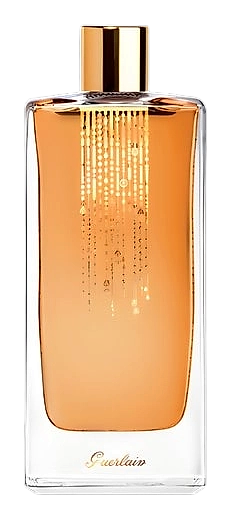
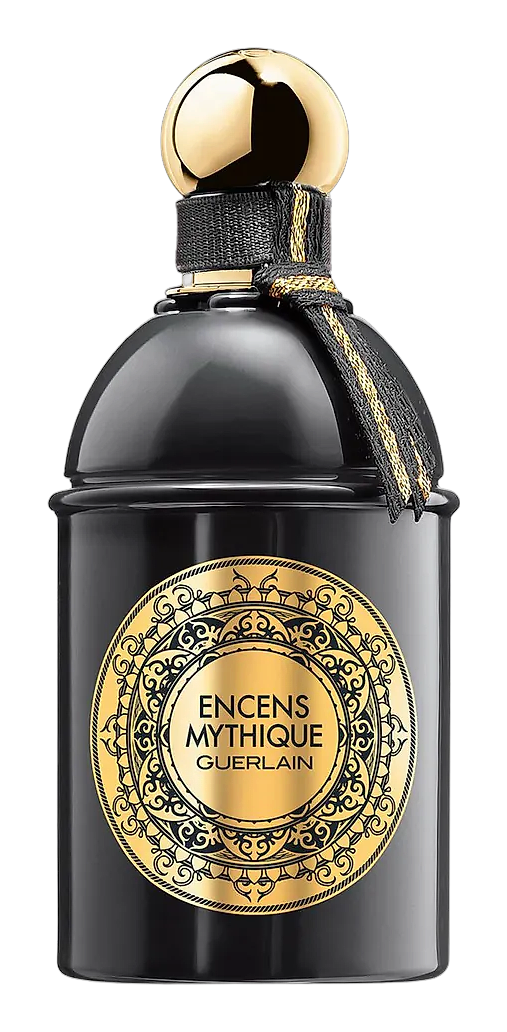
Guerlain's Les Absolus d'Orient collection represents the house's return to opulent, richly textured orient fragrances. Thierry Wasser, as in-house perfumer, drew from decades of Guerlain's heritage in oriental compositions while seeking a contemporary vocabulary. Encens Mythique, meaning mythical incense, positions itself as a meditation on sacred resins, particularly frankincense. The collection strips away the broader Guerlain catalog to focus on concentrated, singular expressions of scent families. Wasser approached incense not as a single note but as a framework for layering ancient and modern olfactory materials, using aldehydes to create a luminous quality that prevents the fragrance from feeling purely archaic.
The word mythical in the name carries weight. Wasser wanted to capture the ritualistic quality of incense without replicating any specific sacred context. Aldehydes serve as the bridge between Guerlain's historical aldehydic florals and this more austere orient structure.
The evolution
The aldehydes arrive first, injecting the fragrance with immediate brilliance. They coat the rose and saffron, preventing either from becoming too precious or sweet. Within twenty minutes, the composition shifts. Pink pepper introduces a subtle spiced element while patchouli and vetiver push upward from the base, adding earthiness that balances the brightness. The transition feels deliberate rather than sudden. As the drydown approaches, ambergris softens the edges, adding a marine-animalic warmth that bridges the heart to the base. Frankincense then claims the foreground completely, supported by woody notes that create a dry, long-lasting foundation. The evolution moves from shimmering brightness to earthy warmth to resinous depth, each phase informing the next without abrupt boundaries.
Cultural impact
Encens Mythique sits in an unusual position, floral enough for traditional tastes, animalic enough to polarize, oriental enough to be warm without being heavy. The aldehyde opening is soft, warm, and reads differently on different skin. Some find golden light, others find something more metallic, and both sensations come from the same material. Those who wait past the opening find a fragrance that unfolds patiently, revealing complexity in stages rather than all at once.
The House
GuerlainGuerlain stands as one of the oldest and most revered perfume houses in the world, founded in Paris in 1828 by Pierre-François-Pascal Guerlain. What began as a boutique on rue de Rivoli quickly became the preferred destination for Parisian society, attracting dandies and elegant women who sought custom-crafted fragrances. The house's influence grew to such heights that Guerlain earned the title of Official Perfumer to Napoleon III after presenting Eau de Cologne Impériale to Empress Eugénie as a wedding gift in 1853. This royal patronage marked the beginning of Guerlain's enduring association with European aristocracy, as the house went on to create fragrances for Queen Victoria and Queen Isabella II of Spain. Today, under the creative direction of Thierry Wasser, the fifth-generation perfumer, Guerlain continues to shape the landscape of fine fragrance with a portfolio spanning over 1,100 olfactory creations. The house remains headquartered at its legendary Champs-Élysées mansion, a historic monument that anchors Guerlain's position at the intersection of heritage and contemporary luxury.
The Creator
Thierry WasserWasser gravitates toward green, crispy notes and the bold florals Guerlain is known for. Bulgarian rose appears repeatedly in his work, and he travels annually to oversee the harvest in Kazanlak.