
The Story
Why it exists.
The beginning
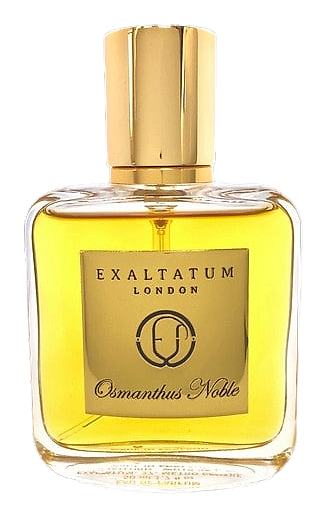
Osmanthus Noble draws its spark from Rubens, specifically the 17th-century Samson and Delilah, a painting drenched in soft leather, rustling silk, and the kind of opulent tension you can almost hear. Perfumer Eglija Vaitkevice translated that visual drama into scent in 2018, building the composition around the contrast between luminous florals and heavy, tactile materials. The osmanthus absolute at the heart is the hinge: a flower that smells like sun-warmed apricot leather, already half-tanned, already halfway between bloom and decay. Around it, Vaitkevice arranges aldehydes for the painter's brightness, suede for the upholstery of the scene, and a tobacco-amber base for the shadows pooling in the corners.
What makes the composition interesting is the push-and-pull between transparency and weight. The aldehydes at the top lift and sharpen, adding a brightness that makes everything around them feel more awake, more present. But the formula pairs that lift with styrax and animalic notes, materials that pull the whole thing back toward skin and shadow. Osmanthus itself does double duty here, reading as a floral that behaves like a leather one, apricot-skin soft yet edged with something darker. The cardamom and saffron do the same trick, spice that reads as both warmth and texture.
The evolution
The opening is loud. Aldehydes crackle over cardamom and mandarin, bright and almost fizzy, the way a freshly struck chord sounds before it settles. Then the suede and osmanthus arrive together, soft and apricot-skin warm, and the saffron threads through like gilt on a frame. The heart holds steady for a long stretch, a dense weave of jasmine, ylang-ylang, and clary sage that smells like someone running their hand over old velvet. The florals don't sit on top of one another so much as fold into each other, jasmine's indolic richness mingling with ylang's banana-skin sweetness while clary sage cools everything down with its herbal, almost hay-like edge. As the hours pass, the tobacco and sandalwood take over and the composition shifts from bright to grounded. The base doesn't fade so much as sink into skin, leaving an animalic warmth that stays close to the body.
Cultural impact
Osmanthus Noble sits in the part of niche perfumery where florals meet leather, a register that tends to reward patience and cold weather. Wearers often describe it in painterly terms, the way a single canvas can hold both flesh and shadow at once. It's not a crowd-pleaser in the commercial sense, and it doesn't try to be. It's the kind of scent that finds its people in autumn and winter, on cold skin under wool, and stays with them season after season. The composition rewards close attention, and the people who love it tend to be the ones willing to lean in.