
The Story
Why it exists.
The beginning
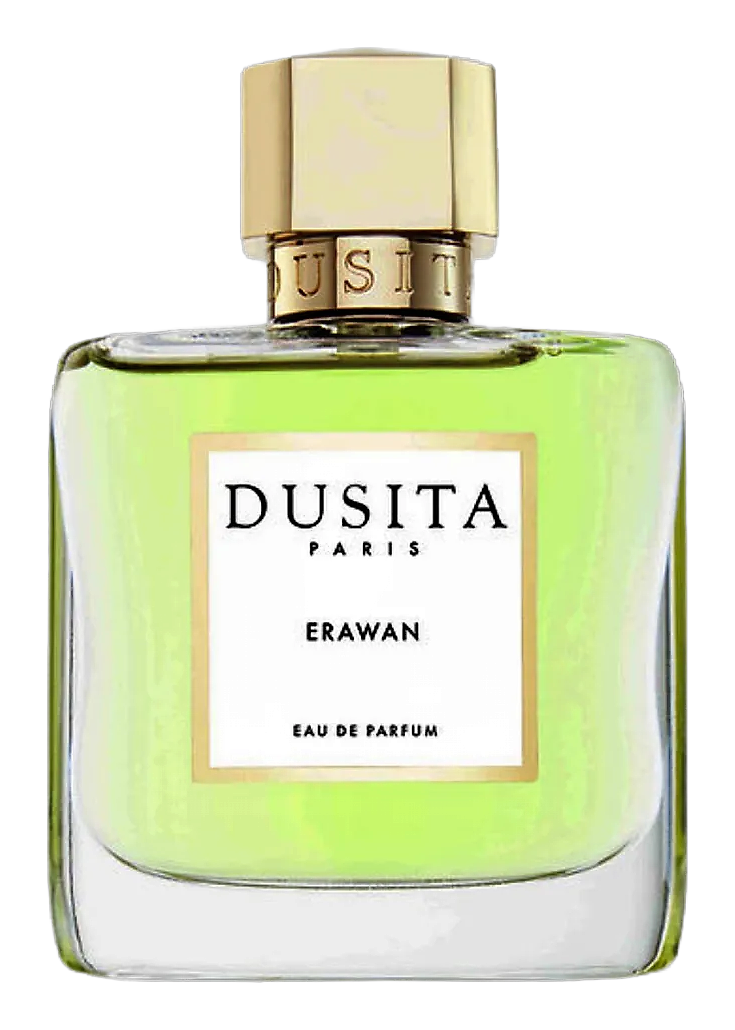
Erawan takes its name from a Thai concept, Erawan, the celestial elephant of Buddhist cosmology, circling a sacred mountain in the heavens. It is paradise rendered as a place, and as an idea: the point where the spirit finds pure contentment. Pissara Umavijani built Erawan as a Gourmand Fougère, a classification that typically lives in masculine territory, then quietly stripped it of every expected move. No heavy woods. No tobacco swagger. Instead: hay as the narrative spine, vanilla as warmth, cedar and oakmoss as what remains when the sun goes down. The 2018 release arrived without announcement and without apology, built for someone who knew exactly what they were looking for and couldn't find it elsewhere.
Hay is not a common perfumery material. It is difficult to work with, fleeting, easily lost in composition, prone to reading as stale rather than sunlit. Most houses avoid it entirely. The choice to build a fragrance around hay, then sweeten it with vanilla and ground it with cedar, is a structural decision that few perfumers would risk. It creates a tension between dry herbaceousness and gourmand warmth that Erawan never fully resolves, and that is precisely what makes it interesting. The vetiver adds earth without adding weight. The oakmoss adds depth without adding darkness. What remains is a fragrance that smells like a specific afternoon in a specific place, captured and held in a bottle.
The evolution
Petitgrain and clary sage hit first. Bright, bitter, distinctly aromatic, almost medicinal in the first minutes before the herbal quality softens into something more approachable. Then the hay arrives, not gradually but all at once, dry and grassy and sunlit, carrying a slight edge that some noses read as tobacco, others as cut stems. Vanilla slides in underneath, creamy and warm, keeping the hay honest rather than sharp. The transition to drydown is where Erawan earns its reputation. Cedar emerges slowly, wrapping around the vanilla and hay and holding them close to the skin. Oakmoss deepens the base, adding an earthy quality that reads as natural rather than composed. Tonka bean appears last, a whisper of sweetness that never fully announces itself. The final hours on skin are intimate, close enough that only you know it's there, but persistent enough that you keep catching it for a full workday. On fabric, the hay lingers into the next morning.
Cultural impact
The name Erawan pays homage to the legendary Erawan Hotel in Bangkok, a cultural landmark that served as a gathering place for artists, writers, and intellectuals during Thailand's post-war cultural renaissance. The hotel's tragic destruction by a bomb in 1975 became a symbol of resilience and hope for the Thai people, and its reconstruction cemented its status as a national symbol. Parfums Dusita, founded by Ploh, draws upon this rich cultural history, with the fragrance embodying the spirit of Thai heritage and modern perfumery. The use of regional ingredients like Petitgrain Paraguay reflects Thailand's global influences while maintaining local character. Erawan stands as a bridge between Eastern and Western sensibilities, much like the hotel itself once did.