The Story
Why it exists.
The beginning
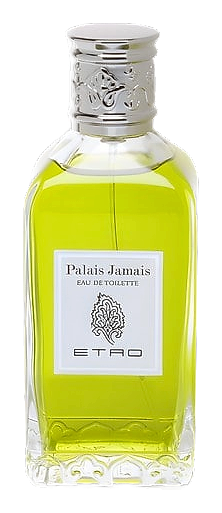
Palais Jamais arrived in 1989, created by perfumer Daniela Andrier for Etro. The name, 'never palace' in French, carries a certain architectural fantasy, a structure that exists only in imagination. That tension between the real and the invented fits an Etro fragrance precisely. The house translates cultural reference into scent: a market, a garden, a trade route, a dream of a place. Palais Jamais seems to reach for something wilder, not a garden but open highland, not a path but a moor track vanishing into mist.
What makes this composition unusual is the pairing of cool green oakmoss with birch smoke, a combination that reads as slightly medicinal in the opening, then resolves into something deeply pastoral. The clary sage adds an herbal bitterness that most wearers either embrace or find too austere. There's no softness here, no easy sweetness. The musk anchors everything with a waxy warmth that keeps the green and smoky elements from becoming purely intellectual. This is a fragrance that asks something of the wearer.
The evolution
The opening arrives damp and green, petitgrain and bergamot bright against something cooler underneath. That initial citrus flash doesn't linger. Within minutes the composition shifts into a misty, cool-idyllic space: grasses, hay, highland with high rains. The birch tar note surfaces here, giving the heart a smoky, almost ashtray edge that polarizes. But alongside it, clary sage and musk create a deep, contemplative forest atmosphere. This is where the fragrance earns its moor-and-heath reputation. The drydown strips everything back. Vetiver and oakmoss take over, their cool, leathery character settling close to the skin for hours. The oakmoss does the heavy lifting, dry, slightly bitter, with that wine-cork nuance some wearers detect. This is not a fragrance that announces itself. It asks you to lean in.
Cultural impact
Since its 1989 launch, Palais Jamais has cultivated a following among wearers who appreciate its unconventional, atmospheric character. Community members describe it as moor-and-heath in a bottle, highlands with high rains, a fog-covered landscape that doesn't soften or conform. The green-smoky-oakmoss combination sets it apart from the citrus-forward and floral-heavy releases of its era. That it remains in production speaks to a loyal base that returns to it season after season.