The Story
Why it exists.
The beginning
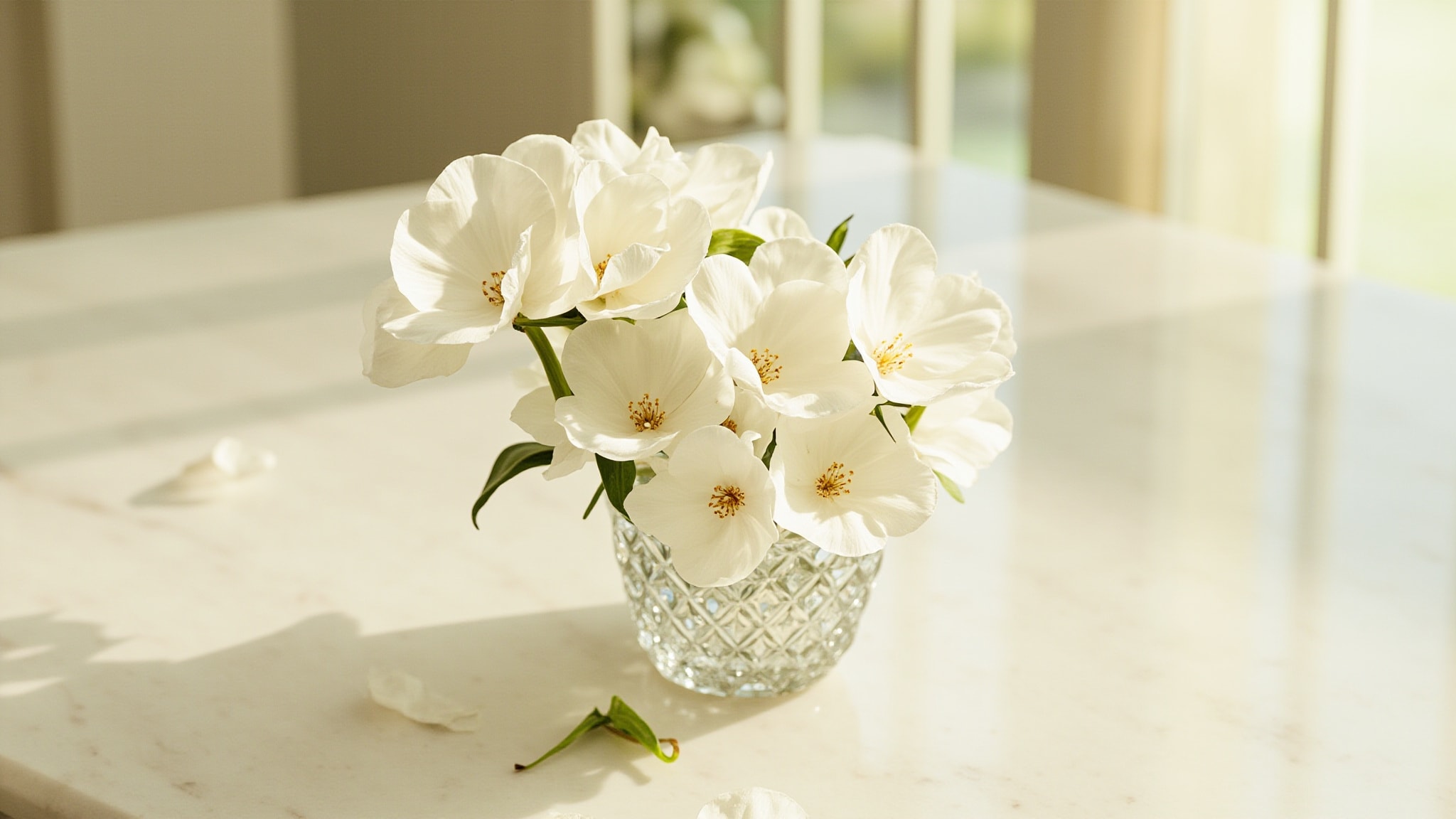
Beautiful arrived in 1985, created by Sophia Grojsman and Bernard Chant alongside teams at IFF. The name came first, and it became the brief. What does beauty smell like? Not seduction. Not power. Something closer to the moment someone says you're beautiful and means it. The perfumers built the fragrance around that question, choosing abundance over restraint, richness over restraint. A thousand flowers, not one. That's not just the copy, it's the intent.
The note structure is deliberate in its excess. Most fragrances build toward a heart. Beautiful opens with one, a citrus-green burst of mandarin, bergamot, and galbanum that gives way almost immediately to the heart's white florals. Tuberose leads, but it's supported by jasmine, orange blossom, ylang-ylang, and a dozen others. The base is warm and close: sandalwood, amber, vetiver, and just enough musk to make it intimate. This is a pyramid where the middle is the point, not a transition.
The evolution
The opening announces itself quickly, citrus and green notes arrive together, galbanum's crispness cutting through the brightness. Within minutes, the florals take over. Tuberose leads, but jasmine and orange blossom build alongside it. The sillage is strong for the first two hours, filling a space without overwhelming it. Then it settles. The drydown is intimate, warm, close to the skin, sandalwood and cedar with amber and soft vetiver. The musk keeps it there. On most skin, Beautiful lasts through the workday and into the evening. The vanilla in the base ensures it lingers, but quietly.
Cultural impact
Beautiful has been a reference point in feminine perfumery since 1985. Forty years on, it remains one of the most discussed white floral fragrances, loved for its abundance, polarizing for the same reason. It's the benchmark for what a romantic floral can be when it refuses to apologize for being too much.