
The Story
Why it exists.
The beginning
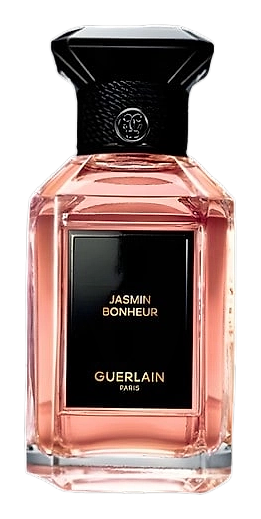
Jasmin Bonheur began with a question: what if joy had a color? Guerlain's perfumer Delphine Jelk looked to Henri Matisse, his canvas of saturated hue, his refusal to paint melancholy when warmth was available. The result is jasmine reimagined as something Matisse might have recognized: not the solemn white blossom of tradition, but a riot of apricot orange, powdery violet, and tender pink. The official description frames it plainly, radiant orange, vibrant violet, tender pink, but the feeling is anything but. This is joy with architecture.
What makes Jasmin Bonheur distinctive is its sourcing. Guerlain pulled jasmine from three origins, Grasse, Calabria, and India, each contributing a different facet to the whole. The Indian sambac brings a solar, almost tropical sweetness. The Calabrian adds heat and body. The Grasse jasmine contributes the classic green-stem elegance. Together with apricot in the top and iris anchoring the base, this isn't jasmine layered onto fruit, it's fruit woven into jasmine so completely that separating them becomes impossible. The Guerlinade, Guerlain's signature accord, threads through as it does in every house fragrance, but here it reads as whispered infrastructure rather than declaration.
The evolution
The opening arrives bright, apricot and bergamot doing the work of a sunrise. Within minutes jasmine takes over, not abandoning the apricot so much as absorbing it. The transition feels natural: what was fruit becomes florals, and neither announces itself over the other. By the second hour, rose and orange blossom have fully arrived, and the composition enters its richest phase, floral and warm and quietly joyful. The drydown belongs to iris. Powdery, clean, persistent, it outlives the jasmine by several hours, staying close to the skin like a memory rather than a statement. The composition strikes a refined balance throughout, neither shy nor assertive, with jasmine consistently anchoring the experience while other notes contribute their own character as the fragrance moves through its phases.
Cultural impact
Jasmin Bonheur embodies joy and unapologetic prettiness, the kind of fragrance that feels effortlessly elegant. It sits comfortably among Guerlain's more accessible offerings while retaining the house's characteristic depth, the kind of perfume that reads as expensive without trying to. The scent feels like an invitation to uncomplicated joy, inviting wearers into a world where sweetness and beauty need no apology. Within Guerlain's collection, it stands as a celebration of floral richness and graceful presence, approachable yet deeply rooted in the house's commitment to luxury and sensory pleasure.
The House
GuerlainGuerlain stands as one of the oldest and most revered perfume houses in the world, founded in Paris in 1828 by Pierre-François-Pascal Guerlain. What began as a boutique on rue de Rivoli quickly became the preferred destination for Parisian society, attracting dandies and elegant women who sought custom-crafted fragrances. The house's influence grew to such heights that Guerlain earned the title of Official Perfumer to Napoleon III after presenting Eau de Cologne Impériale to Empress Eugénie as a wedding gift in 1853. This royal patronage marked the beginning of Guerlain's enduring association with European aristocracy, as the house went on to create fragrances for Queen Victoria and Queen Isabella II of Spain. Today, under the creative direction of Thierry Wasser, the fifth-generation perfumer, Guerlain continues to shape the landscape of fine fragrance with a portfolio spanning over 1,100 olfactory creations. The house remains headquartered at its legendary Champs-Élysées mansion, a historic monument that anchors Guerlain's position at the intersection of heritage and contemporary luxury.
The Creator
Delphine JelkJelk builds compositions around contrast and tension—warm, round, and inviting, yet never soft. Her signature leans heavily on iris, musks, and powdery facets that give her work a distinctive texture, like cashmere caught in amber.