
The Story
Why it exists.
The beginning
Taffetas entered Emilio Schuberth's fragrance line in 1950. Its name evokes the texture of fabric: the rustle of something finely tailored, the sense of skin covered by cloth that moves with the body. The house described it as a sensual rustle that accompanies the wearer's movement, a scent shaped around the poised woman imagined through Schuberth's silhouettes. Nothing about that idea demands excess. Taffetas suggests control with texture underneath, the kind of elegance that catches the light because the cut is right. The name carries a material instinct, and the composition follows it: silk has body and sheen, and the fragrance offers both, pairing crisp green edges with a floral center and a dry, grounded base that holds its shape well.
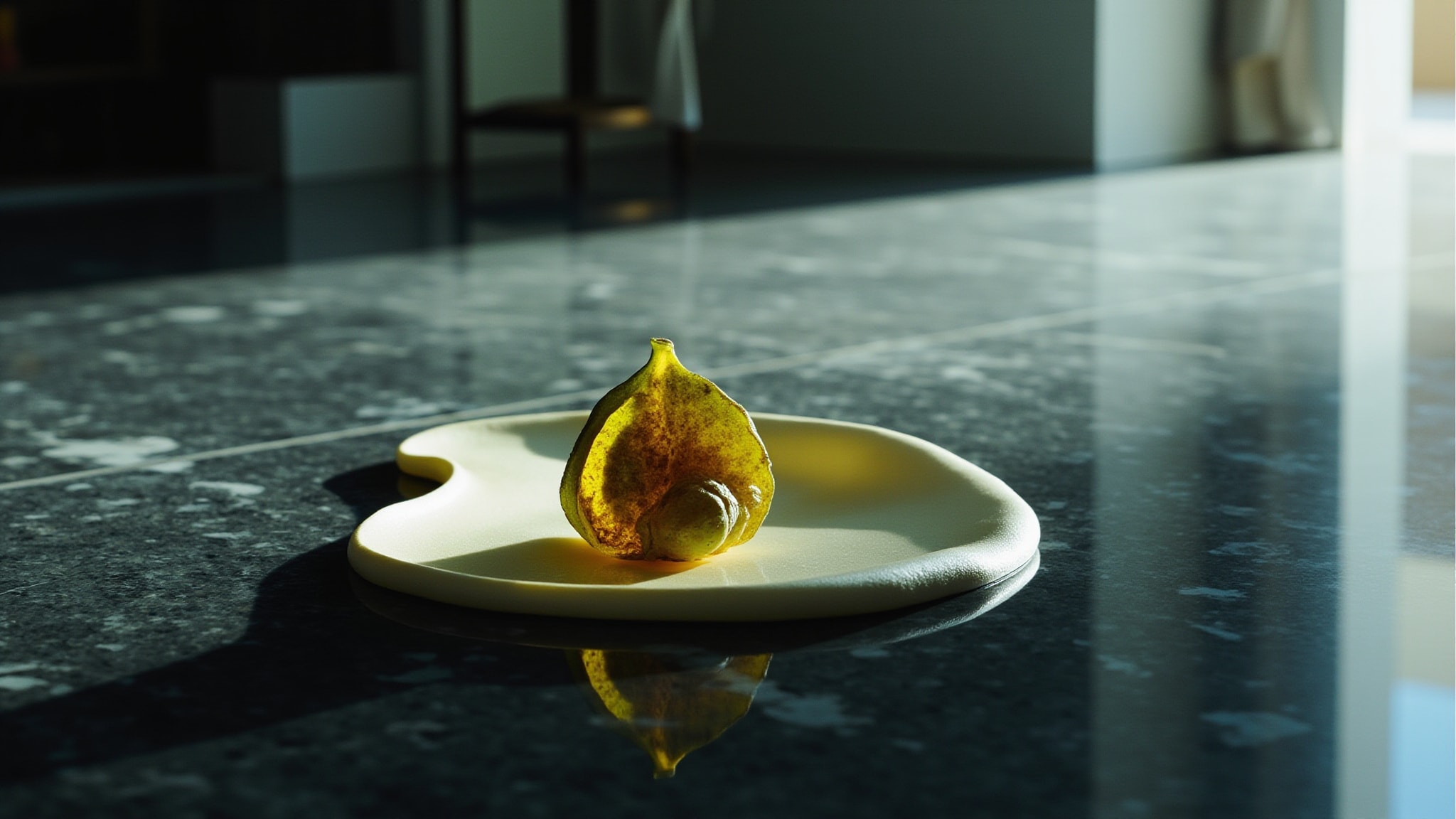
The composition works through contrast. Fig leaf and galbanum bring a clipped, leafy freshness, while saffron introduces heat and metallic brightness. Geranium, rose, narcissus, and white pepper make the heart floral but not demure. Patchouli, vetiver, and musk anchor everything with an earthy, woody finish. It is the contrast that gives Taffetas its identity, not any single note: cool green edges, a rose that stays polished rather than sweet, and a dry base that keeps the whole scent from floating away.
The evolution
Taffetas opens with a green, almost crushed-leaf snap. Fig leaf gives the opening its first impression, and galbanum tightens it with a cool resinous bite. Saffron adds a warm metallic flare, more burnished than sweet. Then the floral heart arrives. Geranium brings a clean herbal edge, rose adds a polished warmth, and narcissus carries a white floral intensity. White pepper cuts through that softness with a clean snap rather than overt heat. The middle moves between cool green brightness and warmer floral tones, the two never fully settling into one another, which keeps the composition alert rather than static. During the drydown, the fragrance becomes darker and more tactile. Patchouli brings an earthy pulse, vetiver dries the edges, and musk rounds the base with a soft, musky texture.
Cultural impact
Taffetas belongs to the register of elegant, composed glamour. Its 1950 launch places it within a period when Italian high fashion was at its height, and the name carries a material-minded approach, treating a perfume as something that dresses the skin with structure and movement. That instinct is visible in the composition itself: crisp green notes at the top, a layered floral heart, and a dry base of patchouli, vetiver, and musk that gives the scent its architecture. The fragrance does not announce itself loudly.