The Story
Why it exists.
The beginning
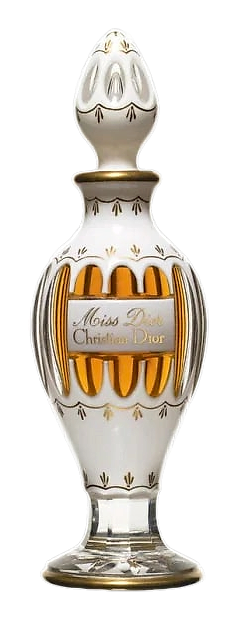
In 1947, the perfume that became Miss Dior arrived, born from a bold impulse: a passionate desire to re-enchant women's lives and let them experience love's vibrant colors. The perfumers (including Paul Vacher) translated that vision into a green chypre floral, wrapped in a crystal amphora that echoed the famous figure-8 silhouette. Miss Dior was born the same year as the collection it was designed to complete, conceived as an essential part of the whole. The result was a fragrance that functioned as a sensory companion to the fashion, a deliberate continuity between the world Dior was showing on the runway and what a woman carried with her into the rest of her life.
This is a green chypre floral, and it announces itself from the first breath. The galbanum brings a raw, almost rubbery greenness, the smell of a stem broken instead of a petal opened. Pairing that with jasmine, rose, and gardenia creates a tension that holds the whole composition together: something sharp and immediate over something lush and classical. The oakmoss base locks everything into the chypre category, a structure that has its own laws of balance and contrast. It is not a coy perfume. It opens its hand and shows you exactly what it intends.
The evolution
The first ten minutes belong entirely to galbanum, green and unapologetic, with bergamot softening the edges just enough to keep it wearable. The galbanum carries a bitterness that feels almost sculptural, a cool green edge that doesn't dissolve so much as hold its shape. Then jasmine and gardenia rise, and the composition pivots into full floral territory without losing its spine. Rose arrives last in the heart, lending a powdery, lipstick-like warmth. As the hours pass, the florals settle, and the base takes over: oakmoss and sandalwood with a quiet earthiness, patchouli threading through underneath. The ambergris doesn't announce itself; it just makes everything last longer than expected. The final drydown is mossy and green, softened by time, carrying a quiet melancholy that stays close to the skin.
Cultural impact
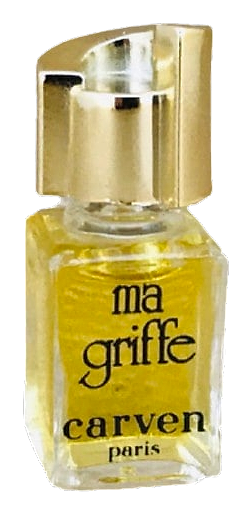
Miss Dior occupies a specific place in postwar perfumery. Carven's Ma Griffe, released in 1946, is often cited alongside it as a contemporary with a similar green, assertive sensibility. The original formulation of Miss Dior is no longer in production, which makes the vintage bottles a particular object of interest. The DNA of that early chypre structure has been carried forward in different ways: in modern chypre revivals, in the broader Dior fragrance portfolio that followed, and in the ongoing conversation about what a green couture perfume can be.