The Story
Why it exists.
The beginning
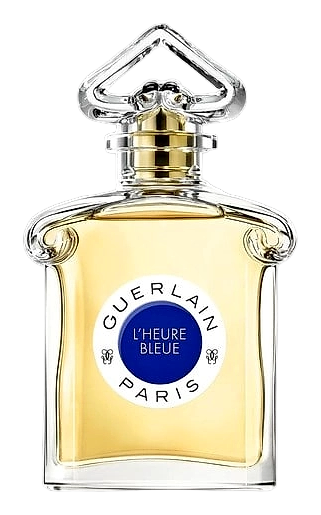
L'Heure Bleue, the blue hour, is Guerlain's name for that suspended moment between day and night when the sky holds neither sun nor stars. Jacques Guerlain created this composition as an olfactory translation of that threshold: the last warmth before the cool settles in, the last brightness before the indigo. The 2021 Eau de Toilette reinterprets the 1912 original, keeping the bold aniseed signature while letting the florals breathe a little more freely in the modern dilution.
What makes this structure unusual is the timing. Most fragrances build from fresh to warm over hours. L'Heure Bleue compresses that arc: the aniseed and bergamot hit immediately, then hand off to the floral heart before you've had time to register the transition. The carnation adds a quiet spice that most noses read as warmth rather than sharpness, a sleight of hand that keeps the composition from feeling angular. By the time the iris and vanilla arrive, the aniseed has already done its work. It's gone. What remains is the soft.
The evolution
The opening lasts perhaps fifteen minutes, aniseed's green, medicinal bite softened by bergamot's citrus brightness. It reads almost like black licorice candy at first, then thins as the bergamot lifts. Then: the hand-off. Neroli arrives quietly, sliding under the receding aniseed like fog rolling in. Carnation adds its weight, not spice exactly, but a certain density, like a room that has been warming with flowers. The drydown is where L'Heure Bleue earns its name. Iris and violet create that powdered softness, and the vanilla-benzoin-tonka base adds a warmth that stays close to the skin for hours. On fabric, the iris lingers into the next day.
Cultural impact
Introduced in 1912, L'Heure Bleue became one of Guerlain's most enduring compositions, remaining in production for over a century. Its powdery, aldehydic character with a distinctive anise note made it a landmark in perfumery history. The fragrance influenced countless subsequent releases and has become a reference point for vintage fragrance enthusiasts, though its polarizing aniseed opening has sparked debate among wearers for generations.