




Heritage
A house, in its own words
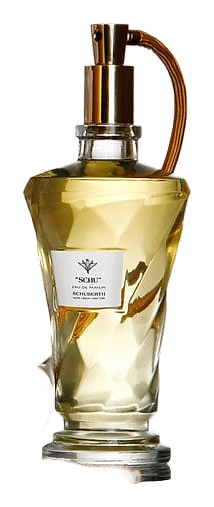
Emilio Federico Schuberth was born on 8 July 1904 in Naples. He opened his first atelier in Milan in 1932, building a clientele that reportedly included the Duchess of Windsor. In 1940 he established his own house, relocating the centre of operations to Rome, where the label would become synonymous with Italian alta moda throughout the 1940s and 1950s. Schuberth was among the founders of Italy's modern fashion industry and a co-architect of the Italian High Fashion Syndicate, an institutional effort to organise and elevate Italian couture on the world stage. His name reached broader public attention in 1955, around the same period he was producing made-to-measure creations for royal families and film actresses. He continued working from Rome until his death on 15 January 1972. The fragrance arm of the maison, launched during the couture heyday, produced compositions such as Schu in 1947 and a series of feminine eaux that carried the same refined, mid-century sensibility as the atelier's garments. The creative vision behind Emilio Schuberth's fragrances mirrors the maison's couture ethos: classical femininity, tailored restraint, and an Italian sense of composed elegance. Schu (1947) and the later Taffetas evoke the textures of fabric and the crisp, structured femininity of post-war Roman dressing. The approach to perfumery at Schuberth was never about volume or trend. It was an extension of the atelier, a way to dress the skin with the same attention given to a bespoke gown. Coquillage and Selaví continue that dialogue between body and ornament, each composition reading like an accessory designed to complete an ensemble rather than stand apart from it. The result is a perfumery of refinement, where the wearer, not the projection, remains the focus.