The Story
Why it exists.
The beginning
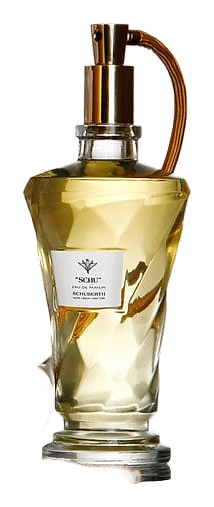
Schu arrived in 1947, the earliest documented composition from Emilio Schuberth's Roman atelier. The fragrance was conceived within the context of post-war Italian alta moda, and the brand's own copy is unflinching about the intent: Schu was meant to evoke the years of the Dolce Vita, its scandals, its protagonists, and the women Schuberth adored like goddesses and dressed like divas. Schu reads as an extension of the atelier's couture work, a composition that carries the same sensibility into the realm of scent that the house brought to its garments. The name itself is short, familiar, almost affectionate in its brevity, a single syllable that recalls the easy shorthand of mid-century Italian fashion houses.
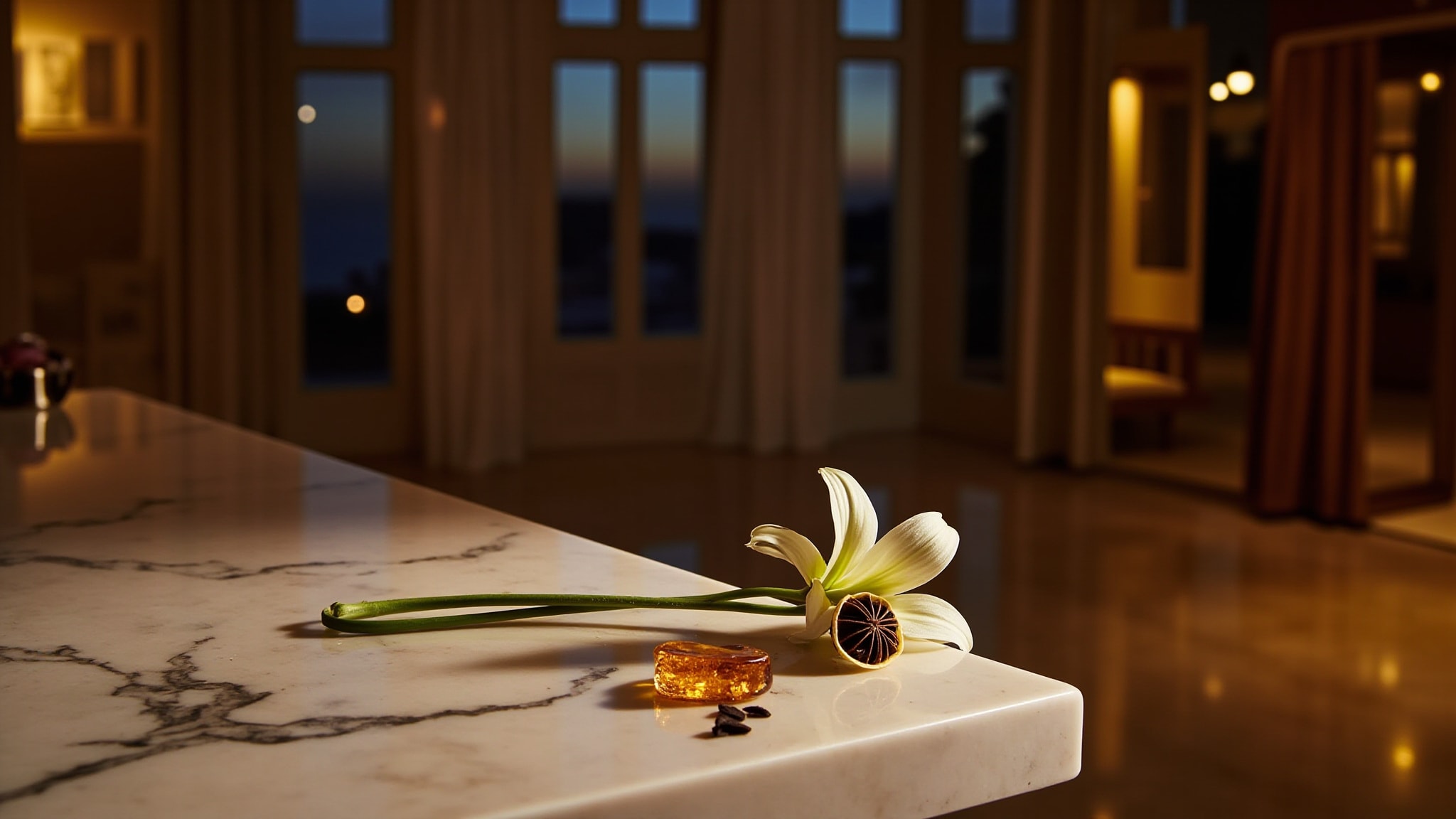
What makes Schu structurally interesting is the tension between its top and base. The opening leans sharp and herbal: artemisia, angelica, star anise, the kind of trio that reads almost medicinal before it softens. Then the composition pivots into white lily, myrrh, frankincense, and ylang-ylang, a heart that pulls equally from devotional incense and tropical flora. The base, though, is where Schu plants its flag: ambergris, cedarwood, vetiver, and oud, layered into a resinous, animalic warmth that gives the whole thing its gravity.
The evolution
The first twenty minutes belong to the anise. Star anise and angelica land sharp, almost like biting into something cold and aromatic, with artemisia threading a dry herbal line underneath. It's not soft. It doesn't introduce itself politely. By the forty-minute mark, the white lily begins to surface, and the sharpness recedes into something rounder, slightly soapy in the cleanest sense, while myrrh and frankincense bring a churchy, resinous hum that sits underneath the florals rather than competing with them. The ylang-ylang adds a ripe, almost bruised sweetness around the edges, a tropical counterpoint to the incense that keeps the heart from drifting too far into the devotional. Past the two-hour mark, the composition shifts weight downward. The lily fades. The incense dims.
Cultural impact
Schu carries a particular weight among collectors who encounter it as an artifact from a specific moment in Italian style, a composition whose incense-and-oud architecture belongs to a lineage that predates the modern niche category. Its blend of myrrh, frankincense, and oud would feel entirely familiar in contemporary niche perfumery, but the fragrance was assembled decades before that category existed, which gives it the authority of a precedent rather than a follower. The 2010 reissue brought it to a wider audience, and the original 1947 blueprint remained intact through that return to circulation.