The Story
Why it exists.
The beginning
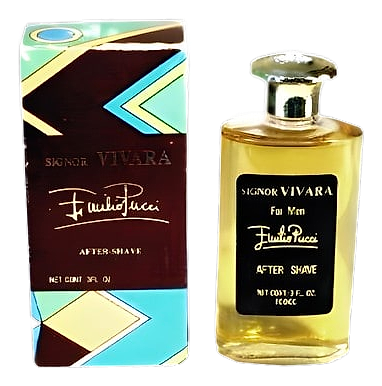
Signor Vivara arrived in 1970 as Pucci extended its fragrance portfolio beyond the 1965 Vivara, introducing a masculine counterpart to the house's signature scent. The name itself signals formality and Italian heritage, Signor as a title, Vivara echoing its namesake. This was Pucci speaking to the man who wanted to carry the brand's runway confidence into his own presence, without dilution. The masculine interpretation kept the spirit of the original while carving out its own territory.
The composition takes the aldehydic tradition and bends it toward something earthier. Bergamot opens bright, but the real work happens in the base, castoreum, costus, leather, and moss create an animalic warmth that feels earned, not reckless. The carnation-cinnamon heart brings warmth without sweetness. It's structured the way Pucci's prints are structured: bold contrast, confident lines, nothing accidental.
The evolution
The opening arrives crisp and aldehydic, bergamot bright against green galbanum and artemisia's herbal bite. Thirty minutes in, the heart asserts itself, carnation's spicy warmth, jasmine's cream, cinnamon's unexpected kick. Then the base takes over. Leather, castoreum, amber, and moss create something that smells like skin, like memory, like the drydown you find hours later on your wrist. There's a warmth to the finish that lingers, a softness that develops as the sharper top notes recede.
Cultural impact
Signor Vivara occupies a specific niche in fragrance history: a discontinued 1970 leather chypre that rewards those who seek it out. Its aldehydic opening places it firmly in its era, while the animalic base gives it a distinctive character that stands apart from modern masculine scents. The fragrance community, particularly those who discovered it in shops frozen in time, treats it as a rare artifact of 1970s Italian glamour.