The Story
Why it exists.
The beginning
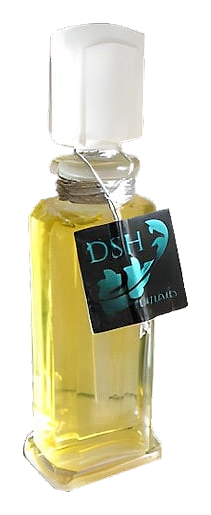
L'Opera des Rouges et des Roses arrived in 2015 as part of DSH Perfumes' Giverny in Bloom Collection, composed by Dawn Spencer Hurwitz for the Denver Art Museum's exhibition "In Bloom: Painting Flowers in the Age of Impressionism." Roses appear in every register she could source, layered until the bouquet stopped smelling like a flower arrangement and started smelling like a painting of one. The composition draws on Bulgarian rose absolute, Damask rose, Moroccan rose, Turkish rose otto, Gallic rose otto, Rose de Mai, and Rosa centifolia absolute, each contributing a different facet of the spectrum. The opening cuts green with rose leaf, palmarosa, neroli, and bergamot, those bright slightly bitter top notes that read as fresh-cut stems rather than dried petals.
What sets this composition apart is the sheer density of rose interpretations. Hurwitz stacked Bulgarian rose absolute alongside Damask rose, Moroccan rose, Turkish rose otto, Gallic rose otto, Rose de Mai, and Rosa centifolia absolute, creating a rose spectrum that ranges from jammy to powdery to almost green. The carnation and clove add a spice-tinged facet that pushes the heart away from simple sweetness, while the honey gives it a candied warmth that reads more like old mead than modern gourmand.
The evolution
The first ten minutes read almost green: rose leaf and palmarosa give it a crushed-stem quality, neroli and bergamot adding that bright, slightly bitter top edge that says fresh-cut rather than potpourri. Within thirty minutes the carnation arrives, clove-warmed, and the roses start deepening from leaf-pink to wine-dark. Bulgarian rose absolute and the Moroccan rose blend push the composition toward something denser, with honey threading through like amber syrup. Jasminum grandiflorum adds a slight animalic edge that keeps it from going twee. By hour two, the base has settled in: East Indian patchouli grounds the whole thing, Mysore sandalwood gives it cream, and the resinous trio of myrrh, benzoin, and tolu balsam wraps the drydown in something that smells warm, woody, and faintly ecclesiastical. The orris root powder and ambergris keep it lifted, never heavy.
Cultural impact
This fragrance draws on a long tradition of rose-forward compositions that take the flower seriously. Hurwitz's approach, layering six distinct rose varieties, treats rose not as a single note but as a category rich enough to merit its own exploration. The composition sits within the broader world of independent perfumery, where natural-leaning formulations and complex floral hearts have carved out a devoted audience. It joins a small canon of rose compositions that emphasize depth and sourcing over a single dominant facet, placing it among works that engage with rose as a serious perfumery material.