The Story
Why it exists.
The beginning
Ashoka takes its name from one of history's most unlikely figures, an emperor who had every intention of conquering everything, then stopped. At the moment his victory was certain, he put down his weapons. The story belongs to Emperor Ashoka of the Mauryan Empire, third century BCE, a ruler whose reputation for ruthlessness dissolved overnight when he chose compassion over expansion. The fragrance is a portrait of that pivot, not before, not after, but the exact moment the shift happened. Bertrand Duchaufour translated the narrative into scent structure: a fierce opening that softens, a green sharpness that becomes floral warmth, a conquest that becomes tenderness. This isn't symbolism in the abstract. The notes map directly to the arc.
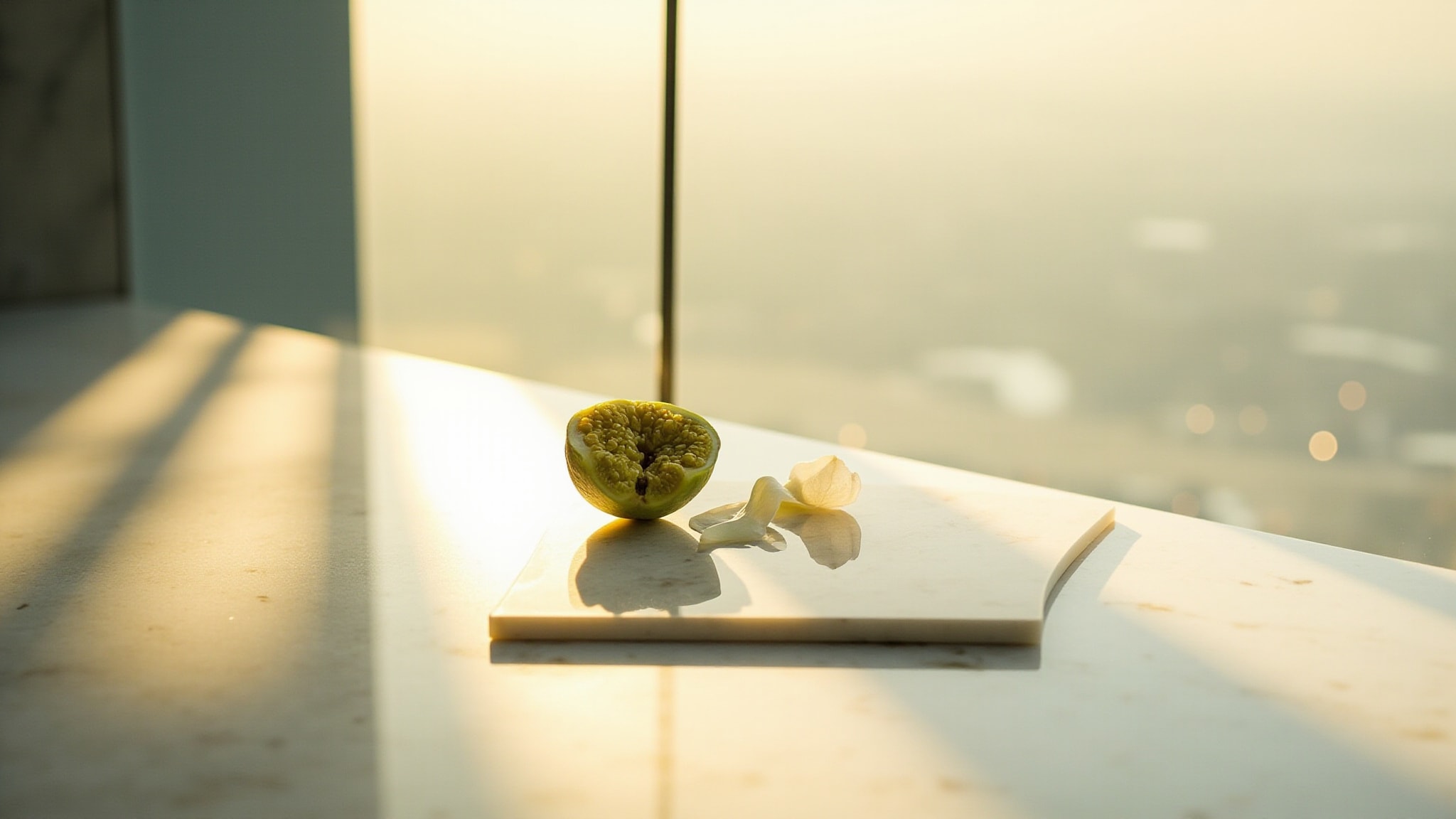
The fig note is where Ashoka lives and dies. Not the fruit, the leaf, the green part, the lactonic milk of the tree. Fig leaf gives the opening its blade. But combined with water hyacinth (aquatic, almost wet) and a touch of parsley (bitter, herbal), the green isn't a meadow. It's the moment before something shifts. The heart introduces fig milk, the sweet, creamy counterpart, alongside osmanthus absolute (apricot-floral) and jasmine sambac (heady, indolic). The yellow florals arrive slowly, warming the green without erasing it. What Duchaufour avoids is the obvious move: he doesn't let the fig go fruity. It stays lactonic, almost savory, which keeps the whole heart from becoming dessert.
The evolution
The opening announces itself immediately. Fig leaf and water hyacinth arrive together, green, aquatic, a little sharp. The parsley adds an herbaceous bite that cuts through what might otherwise feel too soft. This phase lasts maybe 20 minutes before the green begins to recede. What takes over is the lotus, but not alone. Ylang-ylang and osmanthus move in first, bringing a tropical yellow-floral warmth that feels like stepping into a heated room from cold air. The fig milk follows, lending a creamy sweetness that keeps the florals from reading as delicate. Incense appears here too, not smoky, but present, a warm resinous hum underneath the florals. By hour three, the drydown establishes itself. Heliotrope brings its signature powder, soft, almost talc-like. Sandalwood and cedarwood layer underneath, woody and warm. Vanilla and ambergris give it body without sweetness. The myrrh and styrax add a faint balsamic-resinous edge that lingers on fabric. On skin, expect 8-10 hours easily.
Cultural impact
Ashoka won the 2014 Art and Olfaction Award in the Independent category, recognition that positioned it among the most distinctive niche releases of its era. The win validated what wearers had already discovered: this was a fragrance that took a real risk with its opening, then justified it with a heart and base that rewarded patience. In the niche fragrance landscape, Ashoka occupies a specific position, not ostentatious, not safe, but deeply considered. It attracted a wearer who was comfortable with an initial sharpness and patient enough to wait for the floral heart. The brand's willingness to use Emperor Ashoka's story, conversion, compassion, transformation, as the creative engine gave it a narrative weight that distinguished it from purely ingredient-driven compositions.