The Story
Why it exists.
The beginning
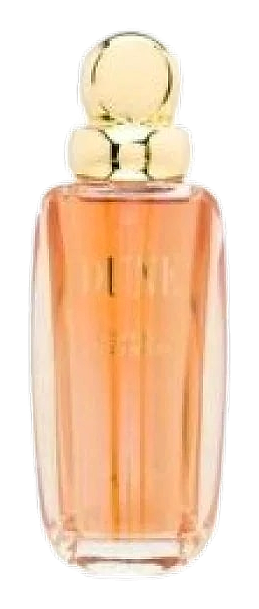
Dune arrived in 1991 from the house of Dior, with the perfumer credited to Jean-Louis Sieuzac. The brief was elemental: sky meeting sand. The heat of a horizon line at the moment the light turns amber. Not the ocean side of Dune, but the desert side, the part that stays with you after the breeze drops. To get there, Sieuzac reached for Brazilian rosewood, aldehydes, and a wall of florals that feels less like a bouquet and more like sun on stone. There's a structural logic at work here that rewards slow attention. The top notes, aldehydes, Brazilian rosewood, bergamot, mandarin, and peony, create an almost architectural lift, the kind of cold, clean geometry that suggests the frame of a building rather than its furnishings. Then the heart arrives and the temperature shifts.
What's interesting here is the structural gamble. Aldehydes and Brazilian rosewood open a composition that could easily tip into something austere, almost architectural, but then ylang-ylang and jasmine hit and the whole thing tilts toward warmth and body. The powder accord builds on peony, on benzoin, on the dusty sweetness of vanilla threaded through oakmoss and patchouli. That tension between the sparkling top and the grounded, almost mineral base is what makes Dune Esprit de Parfum feel composed with serious intention. The florals do the heavy lifting, but they never crowd each other.
The evolution
The first fifteen minutes are the coldest this fragrance ever gets. Aldehydes flash bright, bergamot and mandarin lift the opening into something almost fizzy, and Brazilian rosewood gives it a clean, slightly sharp woodiness. It feels like morning light through linen. Then the floral heart arrives, and the temperature shifts. Ylang-ylang brings its creamy warmth. Jasmine adds a dense sweetness that sits close to the skin before blooming outward. Lily and rose do the heavy lifting of giving the composition its powdery spine. Peony reappears here, softening everything into something plush. This is the phase where Dune shows what it's made of, the moment where the composition stops being a list of notes and starts being a single, breathing thing. The drydown is where everything earns its place. Sandalwood and ambergris settle into a warm, almost golden base.
Cultural impact
Dune Esprit de Parfum wears like a composition from another era, which is precisely its appeal. It doesn't try to translate itself into the current market, and that refusal gives it a kind of authority that trend-driven fragrances can't manufacture. The Esprit de Parfum concentration was apparently discontinued for a period, which has made it harder to find on shelves and shifted its status from accessible luxury to something rarer. For those who know it, that scarcity has only sharpened its identity. It's the kind of fragrance that rewards patience, both in wearing it and in seeking it out.