The Story
Why it exists.
The beginning
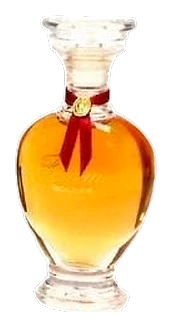
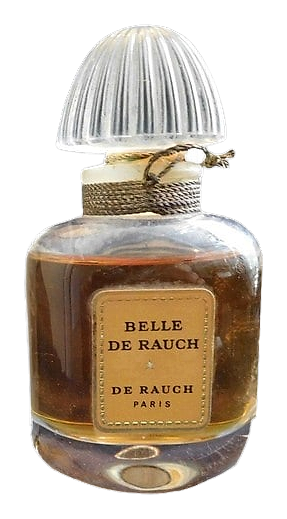
Belle de Rauch arrived in 1966, a white-floral composition from the De Rauch house. The name carries a certain intention: not "beautiful" as marketing flourish, but as a quiet assertion of quality the composition itself has to earn. In the bottle, it reads as a daytime floral with backbone, the kind that wears well in daylight without losing its composure indoors. The accord list is unusually broad for something positioned as a simple floral: white floral, citrus, green, woody, mossy, and earthy all at once. That breadth suggests a perfumer working in the French tradition of building florals with structural support underneath, the chypre skeleton dressed in petals. The juice itself is a study in restraint, built to reveal itself slowly rather than announce itself in the first minute.
What's worth noticing is where the composition sits between categories. Galbanum and neroli in the opening are bracing, green and slightly bitter, the kind of accord that snaps a floral awake before the petals arrive. The heart leans on a white-floral quartet that includes orange blossom, jasmine, lily of the valley, and honeysuckle, each one calibrated to avoid the soapy slide that white florals can fall into when they lack contrast. Oakmoss, orris root, and labdanum do that work.
The evolution
The first few minutes belong to galbanum and neroli, sharp and unmistakably green, the air after rain on a stone path. Bergamot and mandarin soften the edges just enough to let orange blossom and honeysuckle step forward, and the jasmine arrives without shouting. Lily of the valley comes in late in the heart, sweet but starched, like a clean collar. Once the florals settle, orris root and oakmoss take over the drydown with a powdery, slightly bitter grip that keeps everything from turning pretty. Labdanum adds a faint resinous warmth underneath. Sandalwood closes the door. The way the green opening yields to the white-floral heart, and the heart in turn gives way to the mossy-woody base, gives the composition a clear three-act shape on skin.
Cultural impact
Belle de Rauch occupies a particular corner of the vintage collector market as a white-floral chypre from the 1960s that holds its structure across decades. The composition reads cool rather than sweet, with a green-mossy axis that gives the florals their tension. It belongs to a family of French floral chypres from the postwar decades, compositions built on the galbanum-and-oakmoss foundation that supported so many daytime florals of that period.