


Heritage
A house, in its own words
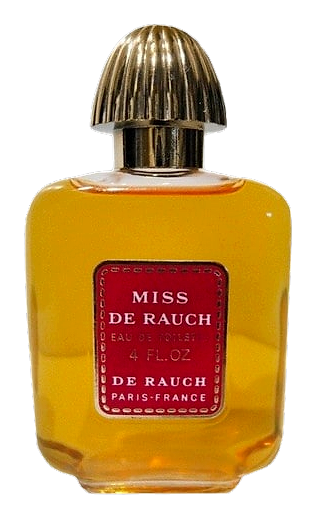
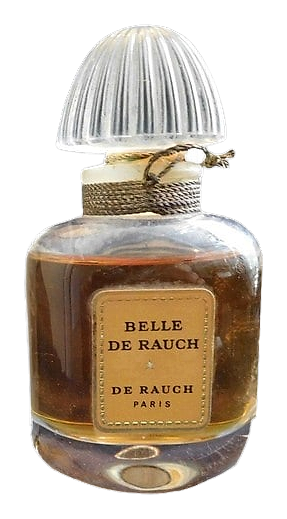
Madeleine de Rauch was born in 1896 and established her Paris couture house in 1932, a decade when French fashion was dominated by a handful of legendary names. She carved out a distinct identity through what contemporaries described as a sporty elegance, a vocabulary of tailored separates and easy daywear that suited the modern, mobile woman of the interwar years. The house operated in parallel with its ready-to-wear and couture activities, eventually extending into fragrance. The first documented perfume linked to the house, Mr. Rauch, appeared in 1950, followed over the next two decades by a tightly curated roster of scents. Miss de Rauch (1960) and Belle de Rauch (1966) reflected the feminine side of the designer's aesthetic, while Vacarme (1966) and Monsieur De Rauch (1973) leaned into a bolder, more assertive register. Royal de Rauch (1973) and Eau Fraîche de Rauch (1974) rounded out what amounted to a compact, decade-spanning catalogue rather than a prolific commercial line. Like many small couture perfume ventures of the era, the fragrance operation never achieved the global footprint of its larger competitors, and production was eventually discontinued. The house has since drifted into the kind of cultural amnesia that sociologist Pierre Bourdieu described as 'the amnesia of genesis,' surviving mainly in vintage bottles, archival advertisements, and the research notes of perfume historians. De Rauch's approach to perfumery mirrored the couturier's design philosophy: restraint, proportion, and a quiet sportiness rooted in mid-century French taste. Rather than chasing opulence or orientalism, the house favored compositions that felt wearable, daytime-appropriate, and aligned with the active lifestyle Madeleine de Rauch championed in her clothing. The fragrance portfolio reflects this duality, with feminine florals sitting alongside more assertive, almost bracing eaux like Vacarme. The brand never articulated a public-facing perfumery manifesto, but the catalog itself reads as a statement of intent: a Parisian house treating scent as a natural extension of its couture identity, not as a separate luxury business.