
The Story
Why it exists.
The beginning
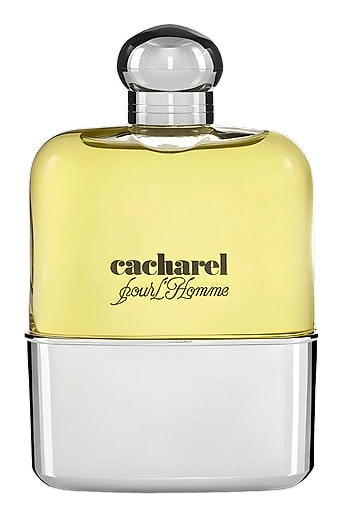
In 1981, Cacharel turned to Gerard Goupy, a perfumer who understood that masculinity wasn't a single note. The brief called for an aromatic composition with spice, yes, but also something softer underneath, something that invited closeness rather than demanding attention. The result was Cacharel pour L'Homme, a fragrance that wore the confidence of its decade without shouting it. Goupy's approach was structural, he built upward from an aromatic foundation rather than anchoring everything in wood and leather, and that decision gave the fragrance an openness that many contemporaries lacked.
Goupy's philosophy for Cacharel pour L'Homme centered on restraint as a form of strength. The opening notes, clary sage, lavender, lemon, bergamot, work as a coordinated signal, clean and direct, designed to communicate without demanding. The heart notes, particularly carnation and geranium, introduce the complexity that separates a composed man from a simple one. Pairing the spiced florals with cyclamen and lily of the valley ensures the composition never tips into aggression. The drydown's vetiver and cedarwood anchor everything in an earthy, woody honesty that feels earned rather than imposed.
The evolution
The fragrance opens with clary sage and lavender anchoring a citrus brightener of lemon and bergamot, a combination that reads as immediately groomed without feeling sterile. The heart introduces carnation and geranium as the primary movers, their spiced, slightly bitter character giving the florals an edge that prevents sweetness from taking over. Ylang-ylang and jasmine deepen the floral layer, while cyclamen and lily of the valley keep everything grounded in something green and restrained. By the drydown, amber and oakmoss have taken over, with vetiver, cedarwood, sandalwood, and musk forming a base that feels close to the skin and quietly persistent rather than projecting loudly into the room.
Cultural impact
Launched in 1981, Cacharel pour L'Homme arrived during a transitional moment in masculine perfumery. The 1980s were dominated by bold, projecting fragrances that announced themselves from across rooms, but this Cacharel release took a quieter approach. The fragrance reflects Cacharel's broader evolution from fashion house to lifestyle brand, using scent as an extension of its identity. Its unusually floral masculine heart, threading ylang-ylang and jasmine through a spiced aromatic structure, set it apart from the louder options of its era.