The Story
Why it exists.
The beginning
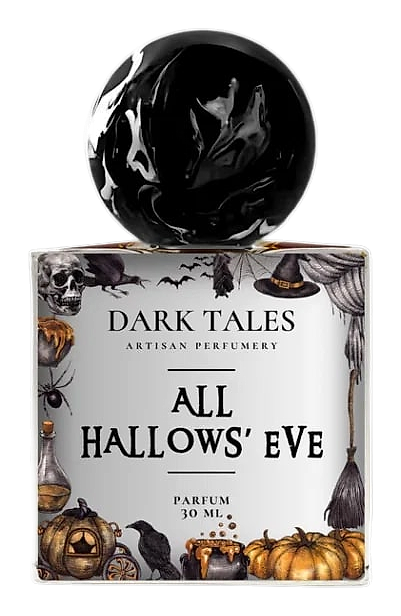
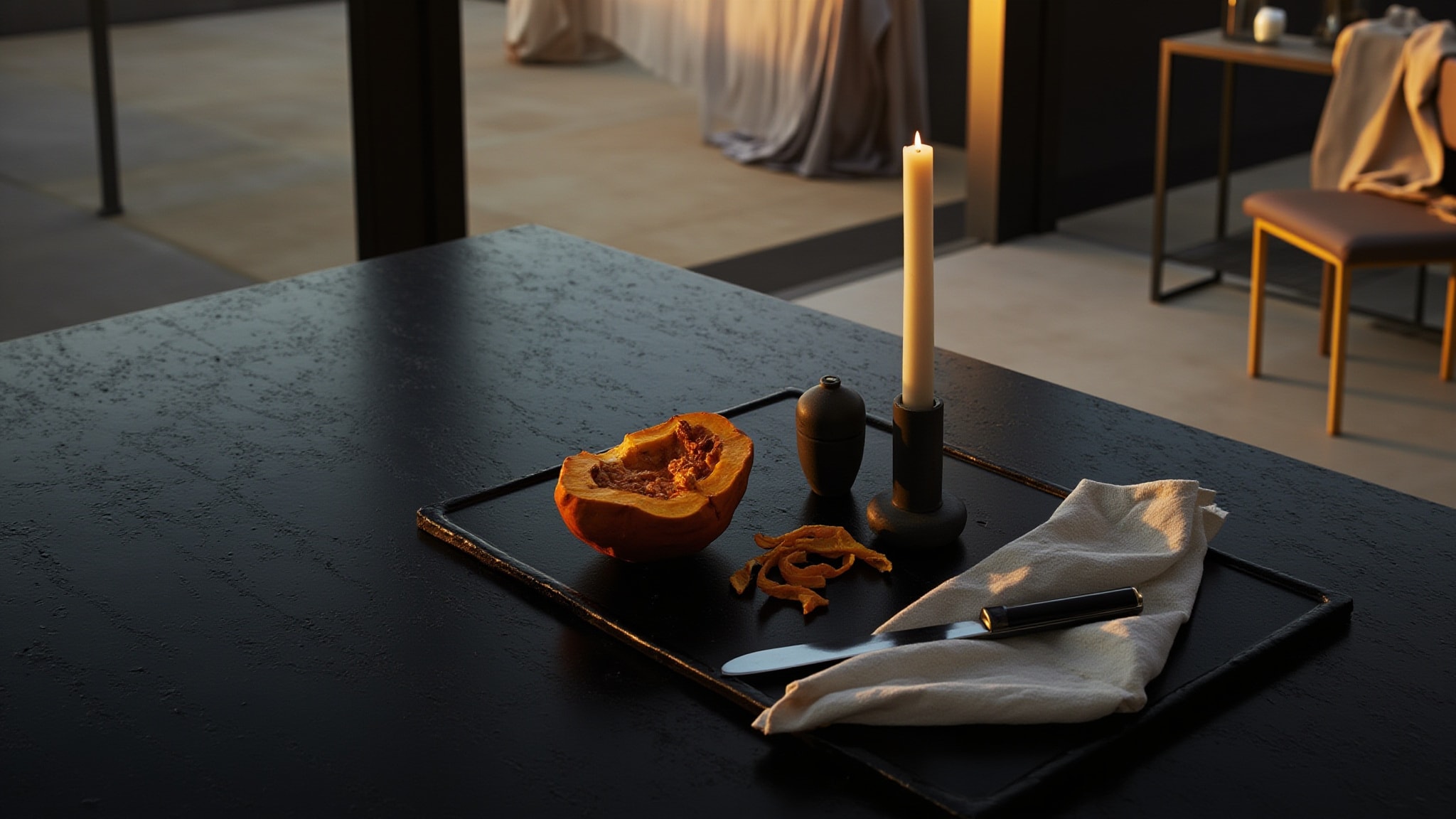
Halloween has always smelled like something burning in the kitchen. All Hallow's Eve translates that domestic ritual into composition. Released in 2025 as part of Dark Tales' seasonal collection, the fragrance comes from Arina P. Franzén, the perfumer behind the house. The composition reads as a specific night: jack-o'-lanterns already lit, apple peels caramelizing on the stove, smoke curling from a candle that's been burning too long. Dark Tales has built its catalog around seasonal rituals, and All Hallow's Eve joins that calendar with a smoky-gourmand register that feels distinctly October. The fragrance opens with a charred sweetness that recalls pumpkin flesh held too close to an open flame, sweet enough to register as edible but edged with carbon.
The opening gambit is burnt pumpkin. Pairing it with candle wax and caramelized apple in the heart, then sending everything into charred wood and ash in the base, creates a progression from kitchen warmth to bonfire residue. The smoky-gourmand accord listed by reviewers isn't accidental, it's the spine: smoke appears both as a named heart note and as the flavor underneath the sweet elements, preventing the composition from drifting into dessert territory. The clove and bitter orange keep it grounded in something spiced and adult rather than candy-like.
The evolution
The first ten minutes are the most volatile. Burnt pumpkin and clove hit hard, sweetened slightly by candied lemon peel, and there's an almost mineral quality from the air accord, a cold breath that makes the warm spices feel closer to a fire than a pie. By the thirty-minute mark the citrus recedes and the candle wax note takes over, joined by licorice and caramelized apple. The composition settles into something that smells like a kitchen after hours of baking, dough-cooled, sugar-darkened, the wax of a burnt-down taper pooling on the table. From hour two onward, the smoke note and frankincense-myrrh resin duo start to dominate, and the sweetness dims. The base is where this fragrance becomes itself: charred wood, guaiac, oak, leather, a trace of damp soil, and labdanum's amber glow underneath. What remains at hour six is mostly ash, benzoin warmth, and a faint leather drydown, closer to a fireplace than a bakery. On fabric the next morning, the wood-and-ash accord persists, stripped of nearly all the sweetness.
Cultural impact
All Hallow's Eve extends Dark Tales' catalog into autumn's specific iconography: the scorched pumpkin, the candle wax, the bonfire residue. Wearers tend to describe it less as a scent and more as a scene, the kind of fragrance that arrives pre-loaded with an occasion. The composition's grip on seasonal shorthand is unusually direct. It doesn't suggest autumn through abstract warmth or generic spice, it reconstructs a specific October night with enough detail that the wearer can almost feel the draft from a window left cracked over a sink full of apple cores.