
The Story
Why it exists.
The beginning
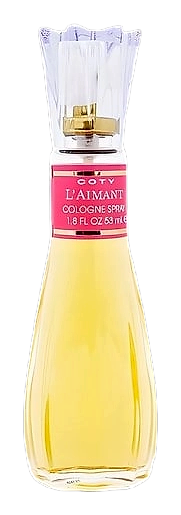
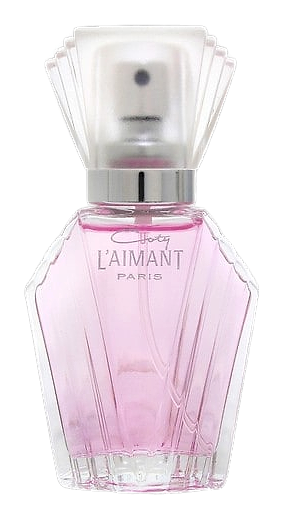
L'Aimant Fleur Rose arrived in 1995 as a floral riff on one of Coty's most storied creations. The original L'Aimant, launched by François Coty in 1927, became one of the defining fragrances of its era. Fleur Rose (literally "rose flower") keeps the name but trades the original's sharp, soapy edges for a fruitier, rounder register. Strawberry and peach up top, a generous bouquet of rose, peony, and jasmine through the middle, sandalwood and vanilla anchoring the close. The composition reads as a rose soliflore with the volume turned to a comfortable, wearable frequency, more garden than gala. Where the original leaned on aldehydes and crisp green notes for its lift, this flanker reaches instead for the sweetness of ripe fruit and the soft haze of white florals.
What makes L'Aimant Fleur Rose worth a second look is how it stacks the florals. Five notes in the heart (rose, peony, jasmine, ylang-ylang, freesia) is a lot of company for a rose-fronted composition, and the trick is in the proportion. Peony and freesia bring the cool, watery lift that keeps the rose from collapsing into jam. Ylang-ylang adds the slightly rubbery, almost tropical undertone that gives the bouquet its creamy warmth. The result is a rose scent that holds its shape across skin types and seasons.
The evolution
The first ten minutes are pure fruit, almost edible. Strawberry lands first, sticky-sweet but cut by bergamot's sharpness before peach rounds the corner with its fuzzy, warm-flesh aroma. Neroli threads through like white light. By the half-hour mark, the fruit recedes and the florals take over. Rose dominates, but it's a powdery rose, the kind that smells like a compact opened in a cool room. Peony lifts it slightly soapy, ylang-ylang adds that creamy, almost-burnt edge, jasmine keeps everything luminous. There's no aldehyde sparkle, which means it never feels sharp or metallic, just consistently soft. The transition into drydown starts around the two-hour mark, and it's where sandalwood finally shows its work. The vanilla arrives quiet, more as a softening agent than a dessert note. Musk tightens everything against the skin.
Cultural impact
L'Aimant Fleur Rose carries the L'Aimant name, and with it the weight of a lineage that stretches back to 1927. Where the original L'Aimant leaned on aldehydes and a crisp, soapy floral structure, this 1995 flanker softens the formula into something fruitier and more approachable. The result is a rose-forward composition that trades the original's sharp edges for a rounder, sweeter register, making it a bridge between classic French perfumery and the softer fruity-florals that defined much of the late twentieth century. The fragrance holds onto the romantic associations of a rose soliflore while updating the wearability for a different era.