The Story
Why it exists.
The beginning
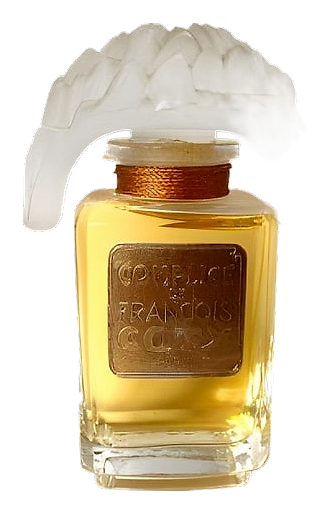
Jean-Pierre Weil designed Complice in 1973 as a meditation on the aldehydic floral form that had defined French perfumery since Chanel No. 5. Where other houses were beginning to push sweeter, heavier compositions, Weil chose restraint. The name itself means 'complicit' in French, suggesting a fragrance that works with the wearer rather than announcing itself to the room. It was built for a woman who wanted to be remembered without being loud, noticed without being obvious.
The composition is a masterclass in structural tension. Aldehydes provide the initial sparkle, that characteristic waxy brilliance that lifts florals into something almost delicate. But Weil didn't stop there. He anchored the brightness to a base of civet and oakmoss, materials with a rich history in Coty's archive. The result is a fragrance that begins in lightness and ends in depth. The peach note softens the aldehydes without dimming them. The orris root adds an earthy powderiness that extends the heart. This isn't a safe composition. It's a confident one.
The evolution
The aldehydes arrive first, sparkling and sharp, immediately demanding attention. Bergamot and orange blossom layer over the top, creating a citrus-aldehyde duet that reads both vintage and modern. Thirty minutes in, the florals take over: lilac, lily of the valley, and rose blend into something that feels like a spring garden at dawn, cool and fragrant. The carnation adds a slight spiced edge. The transition from top to heart happens gradually, the aldehydes never fully disappearing but settling into the composition like background music that never quite stops. The drydown is where Complice earns its name. Oakmoss and vetiver form the classic chypre structure, green and slightly bitter, while sandalwood and benzoin introduce a warm creaminess. The civet lingers throughout, present but never aggressive. Musk wraps everything in a skin-close embrace. This is a fragrance that lasts through a full workday and leaves its mark on a collar the next morning.
Cultural impact
Complice belongs to the lineage of Coty aldehydic florals, a family the house helped define in the twentieth century. It arrived in 1973, late enough in the aldehydic tradition to be self-aware, early enough to carry it with conviction. The chypre structure gives it a green, slightly bitter edge that distinguishes it from sweeter contemporaries. It doesn't dominate a room. It remembers one.