The Story
Why it exists.
The beginning
In 1921, the perfumer Ernest Beaux developed a composition that would reset what a fragrance could be. Beaux worked with aldehydes, a chemical family that perfumers had historically used sparingly, in trace amounts, to brighten a floral accord or give a bouquet a lifted, polished edge. The conventional use was supportive, almost invisible. Beaux turned the volume up. He layered a specific aldehyde complex, C-10, C-11, and C-12, into a ratio where the synthetic stopped serving the natural and became the structural element of the fragrance itself. The result was a cold, soapy sparkle that didn't mimic anything in a garden. It smelled like nothing growing in soil, and that was the point.
Before N°5, aldehydes in perfumery were a supporting tool, added in small amounts to make jasmine smell more like itself or to lift a rose accord into something brighter. The earlier Houbigant composition Quelques Fleurs had used aldehydes, but as accents, as a way to polish the natural florals that still carried the structure. Beaux inverted the relationship. The aldehyde complex C-10, C-11, and C-12 is layered into a ratio where you stop smelling through it and start smelling it.
The evolution
The first spray is loud. Aldehydes and bergamot hit the air in a bright, metallic burst that reads almost fizzy, like the crackle before a match flares. It can feel sharp from the bottle, almost aggressive. On skin it softens quickly. The citrus calms. The neroli rounds the edges, and the aldehydes step back from sharp to clean, the way cold water smells on hot skin. Soon after, the heart is in full command. Grasse jasmine, which is heavy and almost narcotic on its own, is tempered by iris powder and the soft sweetness of May rose. Lily of the valley adds a green flicker underneath. This is the N°5 most people picture, floral but not pretty, warm but not sweet, composed. The drydown is where it earns its legend. Sandalwood and vanilla arrive together, creamy and grounded, and they don't leave.
Cultural impact
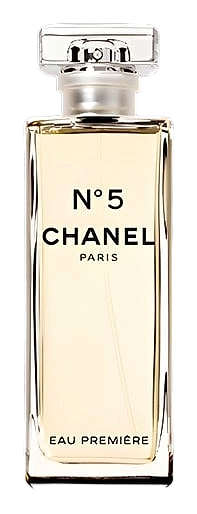
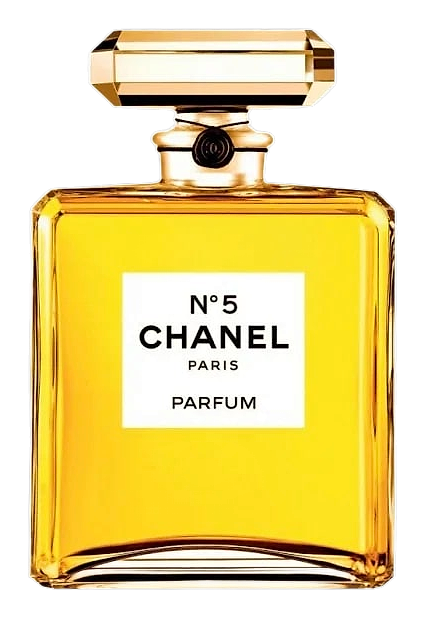
N°5 has been the archetype of the modern floral aldehyde for over a century. When people say 'that smells like perfume,' this is often what they mean. The fragrance crossed from a luxury object into a piece of shared cultural vocabulary, partly because of Marilyn Monroe's famous 1954 answer to what she wore to bed. That moment, more than any campaign, turned the bottle into a symbol rather than just a product. The minimalist flacon, the number, the absence of ornament, all of it read as a kind of confidence that the juice inside could speak for itself.