The Story
Why it exists.
The beginning
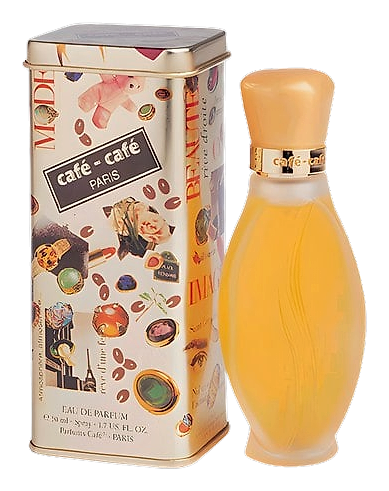
Thomas Fontaine designed Cafe-Cafe in 1996 as the feminine counterpart to Cafe Parfums' original coffee-forward compositions. By then the house had spent nearly two decades proving that coffee could anchor a fragrance without becoming a novelty accord. But a women's flanker called for a different kind of warmth, something softer, rounder, and deeply wearable. Fontaine reached for the fruits and florals that defined the era's idea of femininity, then grounded them in the warm caramel and vanilla that gave the composition its signature.
What sets Cafe-Cafe apart is the powdery iris-rose interplay running through the heart. Rather than stacking heady white florals against fruity sweetness, Fontaine introduced iris, a note that reads as soft and cool, to ground the peach and keep the composition from tipping into pure dessert. The rosemary adds a faint herbal quality that prevents the florals from becoming too precious. In the base, sandalwood and patchouli keep the caramel and vanilla from going flat. The result is sweet without being cloying, powdery without being dusty, a careful balance that has kept this fragrance in rotation for nearly three decades.
The evolution
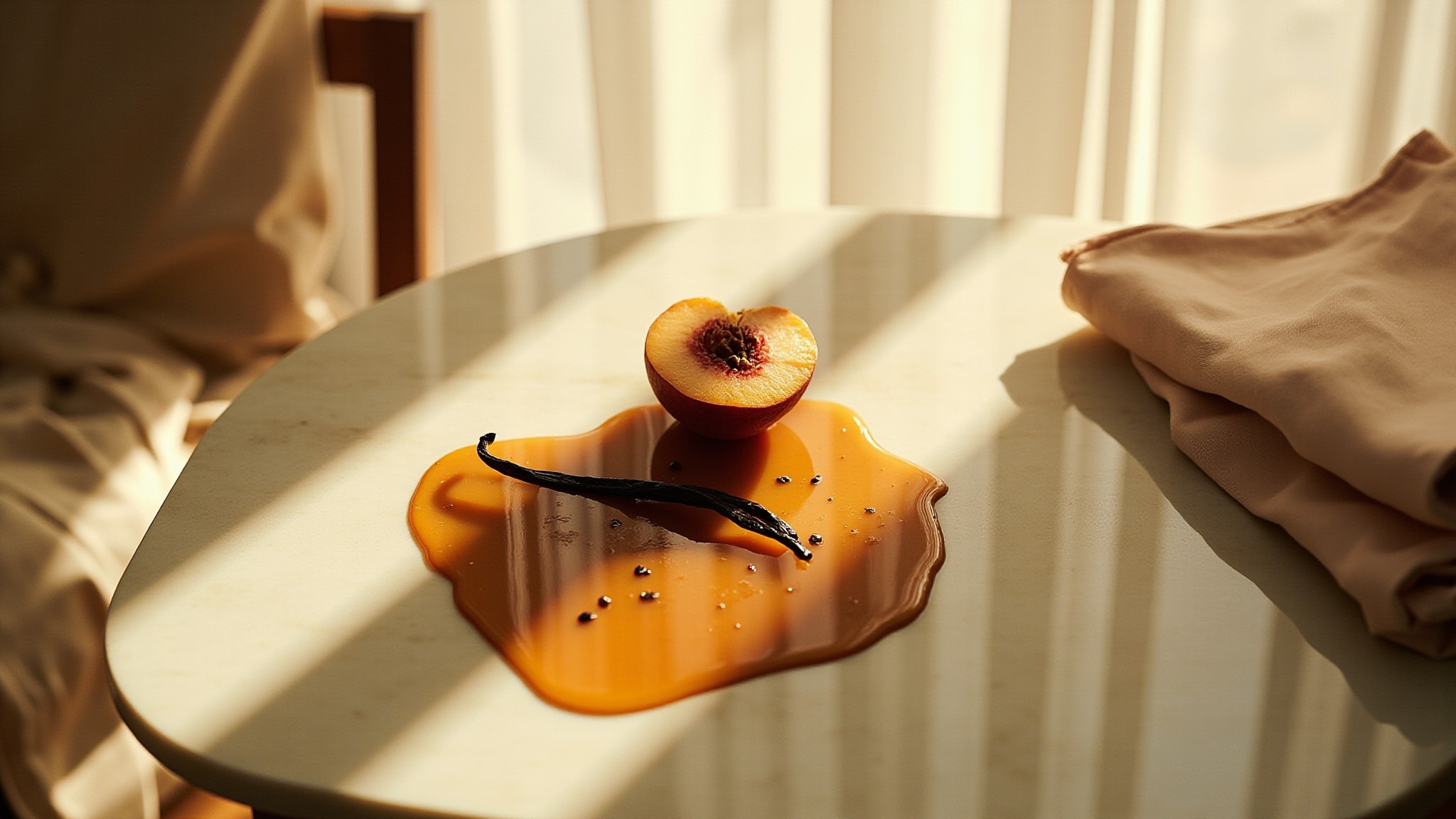
The opening hits immediately with peach and passion fruit, almost tropical, definitely sunlit. Citrus notes (lemon, bergamot) give it brightness without sharpness. Within twenty minutes the heart takes over: iris and tuberose move forward, with lily of the valley adding a clean, slightly green lift. The jasmine and rose appear in waves rather than all at once. By the second hour the florals have settled into their powdery register and the base begins its slow reveal. Caramel and vanilla arrive together, warm, slightly sticky, undeniably sweet. Sandalwood keeps the drydown from becoming syrupy, while patchouli adds a faint earthiness that prevents the whole composition from floating away. Musk is the quiet constant that ties everything together. Six to eight hours later, on fabric especially, what's left is vanilla, soft musk, and a ghost of powder.
Cultural impact
Cafe-Cafe arrived in 1996 as a confident expression of late-90s feminine fragrance culture, sweet, powdery, and unapologetically warm. For many wearers, this is the scent that defines that era, the one they return to not because it is trendy but because it genuinely comforts. Its longevity and the intimacy of its sillage make it the kind of fragrance that stays with you rather than announcing itself from across a room.