The Story
Why it exists.
The beginning
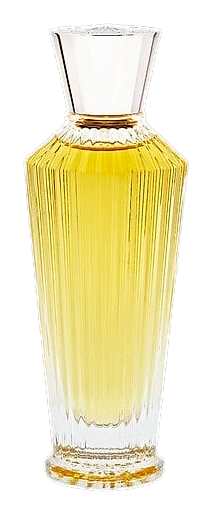
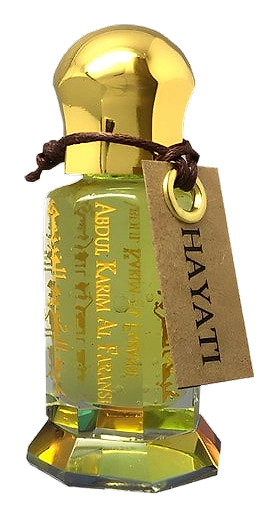
Hayati landed in 2016, composed by Anthony Abdul Karim Marmin, the nose behind Abdul Karim Al Faransi. By mid-decade Marmin was shaping what would become a defining composition for the house, a scent that opens with the transparency of European perfumery and folds inward toward something older. The brand's own framing emphasizes the latter half: floral character at first, then an oriental sweetness taking over. That arc is the whole architecture of the bottle. The opening carries a cool, almost dewy quality, the kind of clarity you find in a well-made cologne, with jasmine and rose threading through citrus brightness in a way that feels lifted rather than heavy. As the hours pass, that lift gradually warms.
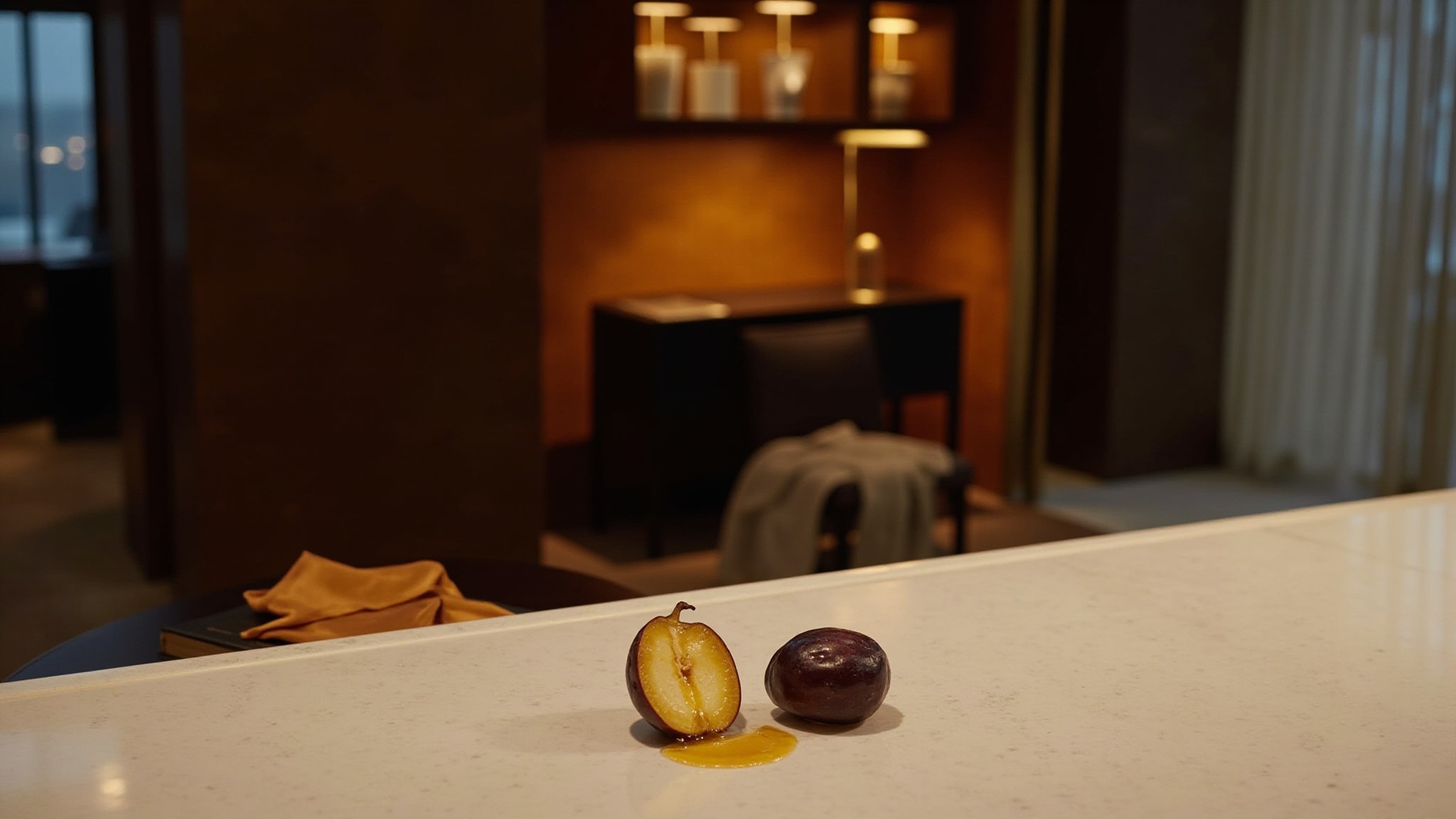
What makes the composition unusual is the negotiation between its two halves. The top layer carries eight notes, jasmine, mandarin, violet, tea, rose, bergamot, plum, and lemon, an unusually crowded opening that still reads clean rather than chaotic. Part of that clarity comes from how the citrus notes behave: they lift and brighten without screaming, and the plum adds a dusky fruit shadow that keeps the lemon from feeling sharp.
The evolution
On skin, the first ten minutes belong to citrus and plum, a bright, almost sharp entry where bergamot and lemon do the talking while jasmine and violet hover underneath like lace. By the thirty-minute mark, honey arrives and shifts the temperature. The fruit flattens into something jammier, and the white florals (magnolia, ylang-ylang, rose) surface through the sweetness, powdery and full. The oud doesn't appear early. It waits until the two-hour mark, then deepens the whole composition into resinous territory, pulling the honey downward into amber and sandalwood. At the four-hour point the florals are mostly memory, replaced by a warm vanillic base with agarwood threading through like smoke caught in fabric. The drydown holds for another two to three hours, intimate, close to the skin, a soft golden trace rather than a statement. On fabric, particularly wool or cotton scarves, the honey and vanilla persist into the next day.
Cultural impact
Hayati occupies a particular kind of middle ground in the world of fragrance: floral enough to read as approachable, oud-backed enough to feel substantial. The opening pulls in anyone drawn to clean, transparent florals, while the base satisfies those who usually want their scents dense, resinous, and built around Arabian materials. That dual reach is part of what makes the bottle interesting. It sits comfortably alongside heavy musk oils in a collection, and just as easily next to lighter extraits. People who want a bit of both worlds, the airy and the grounded, the floral and the oriental, find something to latch onto here.