The Story
Why it exists.
The beginning
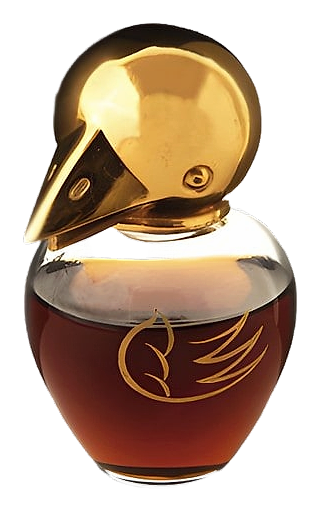
Le Chick Chick arrived in 1923, just before Easter, designed to look every bit the seasonal curiosity: a flacon shaped like a chick, illustrated with the same whimsy that defined Paris in the early 1920s. Michel de Brunhoff designed the bottle, giving this release a distinctive decorative character. Behind the confection was Jacques Vogel, the perfumer associated with Vigny. The name did what Vigny's catalog always did: it skipped past the solemn and pointed at something lighter. A chick, not a dove. Something that runs, chirps, and never quite behaves.
Vigny's house style in the early 1920s leaned into warm, resinous orientals, with balms, amber, and vanilla doing heavy structural work beneath softer florals. Le Chick Chick keeps that skeleton but dresses it in spring clothing. The oriental warmth reads underneath rather than announcing itself, so the juice smells softer and younger than its pedigree suggests. That tension, the costume versus the craft, is what made the house's animal-named pieces compelling. Pretty packaging, serious perfumery, a wink in both directions.
The evolution
The first hour is the floral, bright and almost confectionary, like powdered sweetness rolled across petals. Then the base starts to climb through. Amber warms the skin, vanilla rounds the edges, and the whole thing loses its sugar-coating and gains a low murmur of resin. By hour three it sits closer, quieter, a faint honeyed warmth that holds steady through the rest of the afternoon. Projection softens noticeably after the first ninety minutes. What survives into the late drydown is amber and vanillic softness, faint, comforting, the kind of trace you'd catch on a scarf the next morning.
Cultural impact
Le Chick Chick sits inside an unusual corner of perfumery history: the Easter novelty, the seasonal gift that still got taken seriously. Its chick-shaped flacon, illustrated by Michel de Brunhoff, belongs to a tradition of perfume packaging as object, making the bottle part of the pleasure before the scent is even opened. The playful vessel balances a fragrance described as sweet, floral, and powdery, with a warm, soft finish that gives the composition a gentle depth. Together, the bottle and juice offer a characterful example of perfume presented through imagination, decoration, and mood rather than solemn display.
The House
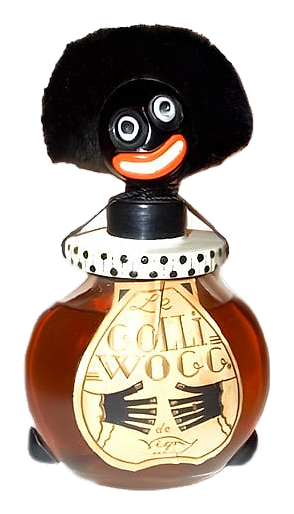
VignyVigny was a short-lived but audacious Parisian fragrance house that operated from 1919 to 1952. Founded by the perfumer Jacques Vogel and his brothers under the original name Parfums de Vigny, the house carved a distinctive niche in early 20th-century French perfumery through its playful, character-driven approach to scent creation. Vigny fragrances often carried whimsical names drawn from popular culture and literature, with bottles and packaging that functioned as collectible art objects. The house's most famous creation, Le Golliwogg, launched in 1919, took its name from a widely recognized children's book character and featured packaging designed in collaboration with illustrator Michel de Brunoff. Though Vigny ceased operations in 1952, its handful of surviving fragrances, particularly the orientals and florals of the 1920s and 1930s, remain objects of fascination for collectors of vintage perfume. The house demonstrated that commercial fragrance could carry narrative depth and artistic ambition, even within a brief three-decade lifespan.
The Creator
Jacques VogelHis signature technique involved layering contrasts in a way that felt inevitable rather than clever. Vogel demonstrated particular facility with vintage materials that modern perfumery would later revisit with nostalgia, working within traditions that emphasized structural cl…