
The Story
Why it exists.
The beginning
Musky was created by Jacques Vogel for women and later renamed Rainure. The fragrance is associated with a floral, woody, musky classification, giving its identity a concise, almost character-like quality. That direct naming makes the concept especially easy to approach: it presents an idea clearly while leaving room for personal interpretation. The available information points to a simple fragrance concept centered on the combined character of floral, woody, and musky tones, rather than to a detailed account of its creation or composition.
The composition is classified as a floral woody musk, placing softness and structure at the center of its identity. Floral and woody elements form the broader framework, while musk gives the concept its clearest connection to the fragrance's name. Together, these classifications suggest a composition built around balance: one part can be considered alone, but the meaning comes from how the categories meet. The name states the central idea directly, making Musky an inviting point of discovery within Vigny's fragrance range.
The evolution
Musky begins with a clear floral woody musk identity, as expressed by its classification. Floral, woody, and musky elements offer three ways to understand the fragrance, with each category contributing a different part of its character. Rather than describing an unsupported sequence of changing impressions, the name and classification provide a stable framework for discovery. The scent can be considered through the relationship among these three elements and the way the concept is expressed through a fragrance later known as Rainure.
Cultural impact
Musky is part of Vigny, with Jacques Vogel identified as its perfumer and the fragrance later renamed Rainure. Its floral woody musk classification gives the concept a compact cultural presence: the name announces one of its defining qualities rather than presenting a more elaborate identity. The available material does not establish a wider setting for the fragrance, so its significance remains centered on its naming, classification, creator, and connection to the renamed scent.
The House
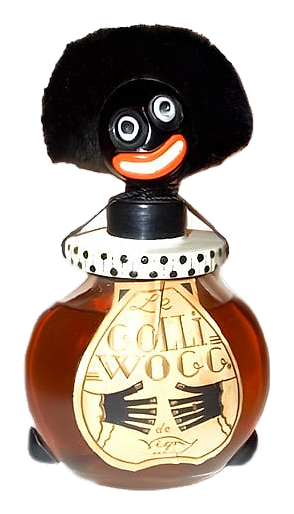
VignyVigny was a short-lived but audacious Parisian fragrance house that operated from 1919 to 1952. Founded by the perfumer Jacques Vogel and his brothers under the original name Parfums de Vigny, the house carved a distinctive niche in early 20th-century French perfumery through its playful, character-driven approach to scent creation. Vigny fragrances often carried whimsical names drawn from popular culture and literature, with bottles and packaging that functioned as collectible art objects. The house's most famous creation, Le Golliwogg, launched in 1919, took its name from a widely recognized children's book character and featured packaging designed in collaboration with illustrator Michel de Brunoff. Though Vigny ceased operations in 1952, its handful of surviving fragrances, particularly the orientals and florals of the 1920s and 1930s, remain objects of fascination for collectors of vintage perfume. The house demonstrated that commercial fragrance could carry narrative depth and artistic ambition, even within a brief three-decade lifespan.
The Creator
Jacques VogelHis signature technique involved layering contrasts in a way that felt inevitable rather than clever. Vogel demonstrated particular facility with vintage materials that modern perfumery would later revisit with nostalgia, working within traditions that emphasized structural cl…