The Story
Why it exists.
The beginning
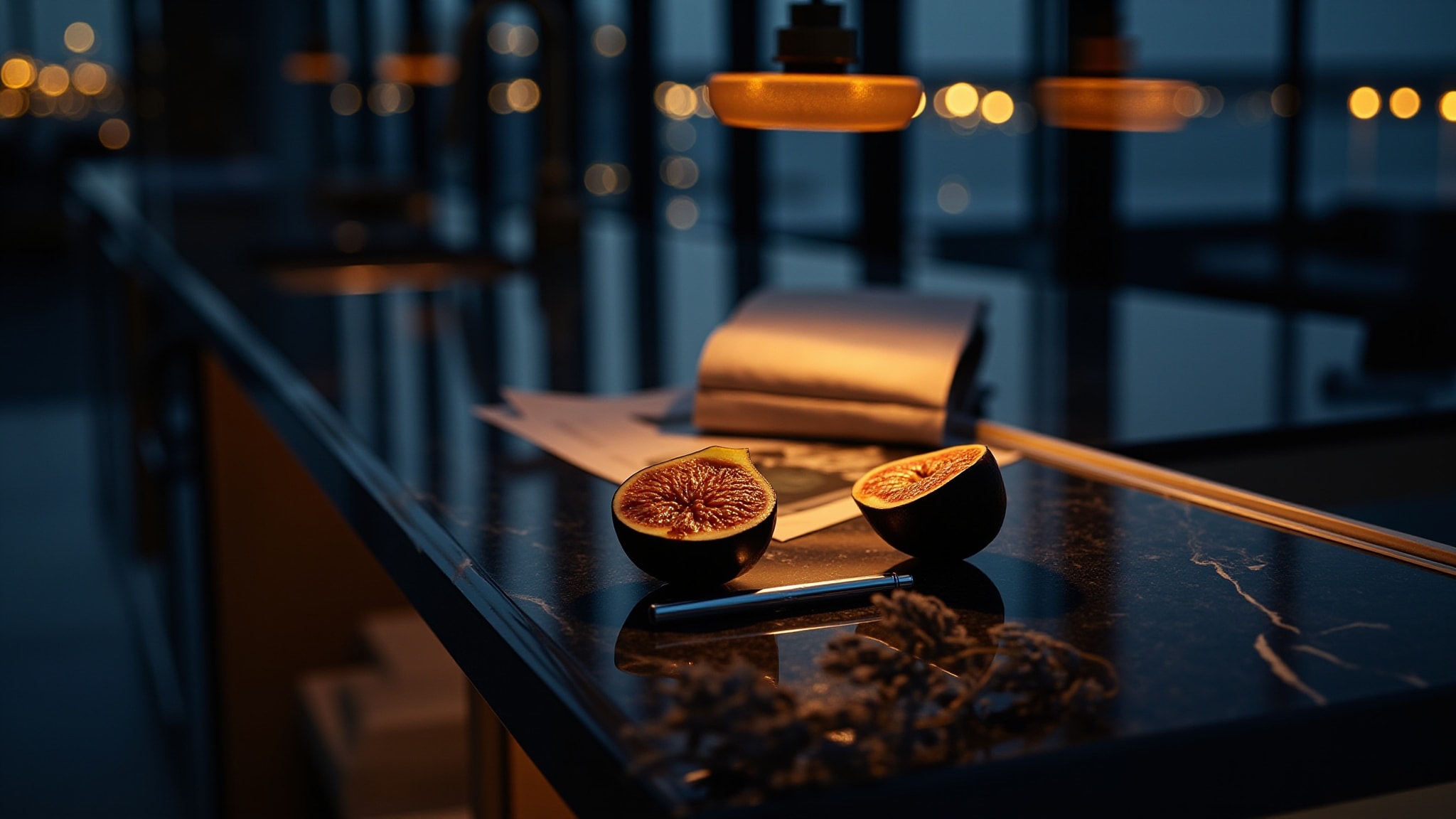
Poisoned Fig started with a problem that natural perfumery has never quite solved. Fig essence doesn't exist the way vanilla or rose absolute exists. There's no steam-distilled oil of ripe fruit waiting on a supplier's shelf, no absolute you can decant and weigh out for a formula. So Joseph DeLapp did what natural perfumers do when a material refuses to cooperate. He set out to duplicate it from scratch, building the scent of a fig out of components that have nothing to do with figs at all. Bergamot and yuzu for the brightness that hits your tongue when you bite into ripe fruit. Jasmine for the fleshy, almost sexual sweetness at the center. Nutmeg and allspice for the peppery heat that climbs up the back of your throat.
What makes Poisoned Fig unusual isn't the fig itself. It's the drydown. Most fig-centered fragrances keep the composition in sweet territory all the way through, leaning on fig leaf for greenness or fig milk for that lactonic creaminess. DeLapp pulls the whole thing somewhere else entirely. Oakmoss, balsam fir, and a sandalwood base that reads more like cold stone than warm wood drag the composition into chypre territory, and the fig grows wilder as it wears. By hour three, you're not smelling fruit anymore.
The evolution
The first ten minutes are all citrus. Bergamot and yuzu arrive loud, almost bracing, with a clean sharpness that doesn't read as feminine or as gourmand. It reads as cold. Like biting into fruit straight from the refrigerator. By minute twenty, the jasmine opens up underneath, and the citrus recedes into the edges. Nutmeg and allspice start to push through, and the whole thing warms up considerably. The fig illusion locks in here. Sweet, slightly peppery, with that dense almost-fruity quality that reads as ripe without ever naming itself. Hour one through hour three is the heart phase, and it's where the fragrance does most of its talking. The lavender keeps things from going too sweet. The jasmine keeps things from going too herbal. It's a balance that holds without effort. Hour four onward, the oakmoss and balsam fir arrive, and they arrive with weight. The fig sweetness doesn't disappear. It just gets covered, like leaves over something forgotten in a garden. The sandalwood underneath is dry, almost mineral.
Cultural impact
Poisoned Fig occupies a specific corner of the fig-fragrance conversation that most houses tend to avoid. The fragrance reads as a natural perfumer's fig rather than a synthetic one, which matters to a particular kind of buyer who tracks ingredient transparency and wants to know exactly what's in the bottle. Within The Rising Phoenix Perfumery's own catalog, the composition stands out for its willingness to abandon sweetness in the later stages and commit fully to a chypre-influenced drydown.