
The Story
Why it exists.
The beginning
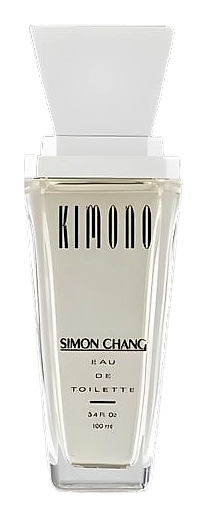
Kimono was launched in 1989 by Simon Chang. Its name suggests tailored cloth, movement, and the private ritual of dressing, but the available history doesn't reveal a documented founding story or a specific inspiration beyond that suggestive title. The composition itself carries the atmosphere: galbanum gives the first impression a green, aromatic snap; narcissus appears twice, lending the arrangement a cool floral signature; tamarind introduces tartness beneath the polished surface. As the scent develops, jasmine, lily of the valley, mimosa, Moroccan rose, and tuberose create a fuller floral center, with narcissus returning as a clean, powdery thread. Blackcurrant adds a dark-fruit flicker, while amber, musk, vanilla, and mandarin orange soften the drydown.
What makes Kimono interesting is the conversation between restraint and opulence. Galbanum and tamarind keep the floral heart from turning precious, while narcissus, jasmine, lily of the valley, mimosa, Moroccan rose, and tuberose build a layered white-floral bouquet. Then the base shifts toward softness: blackcurrant adds dark fruit, amber warms the air, and musk and vanilla leave a smooth finish. The unusual part isn't any single note, but the way the composition moves between clipped greenery, sensual floral cream, and fruit with a little tartness.
The evolution
The first impression is brisk and green. Galbanum slices through narcissus and tamarind, giving the opening the crispness of polished leaves before a colder floral note takes over. As the heart arrives, jasmine, lily of the valley, mimosa, Moroccan rose, and tuberose widen the composition into a full bouquet. Narcissus remains the recurring thread, clean and powdery among the softer florals. During the drydown, the bright edges soften as amber, musk, and vanilla settle close to the skin. Blackcurrant adds a dark-fruit flicker, while mandarin orange keeps the final composition from becoming entirely dessert-like. Over time, what remains is a polished floral warmth with enough green structure to feel composed rather than powdery. The progression moves from sharp, aromatic freshness into a layered floral heart, then settles into a warm base marked by fruit, spice, and soft musks.
Cultural impact
Kimono's identity is carried as much by its composition as by its name. Galbanum and tamarind create a green, tart opening, while narcissus gives the fragrance a cool floral center. Jasmine, lily of the valley, mimosa, Moroccan rose, and tuberose add breadth and a soft floral fullness. As the scent wears, amber, musk, vanilla, blackcurrant, and mandarin orange bring warmth and a subtle fruitiness to the drydown. The composition balances fresh green notes with a rich floral heart and a soft, lasting base.
The House
Simon ChangSimon Chang is a fragrance house associated with expressive compositions built around the atmosphere of place, memory, and ritual. Its scent wardrobe includes Kimono, introduced in 1989, Maestro, introduced in 1991, and the later Kimono Chérie, released in 2012. The names point toward a polished fragrance language shaped by Asian and Western references, while the timeline reflects a house that has continued to revisit its established signatures over several decades. Simon Chang presents perfume as an intimate accessory, a personal scent that can suggest fabric, architecture, travel, and mood.
The Creator
Simon ChangAvailable sourcing on Chang's materials is limited, so any claim about preferred ingredients would be guesswork. What can be observed is the logic of his practice.