The Story
Why it exists.
The beginning
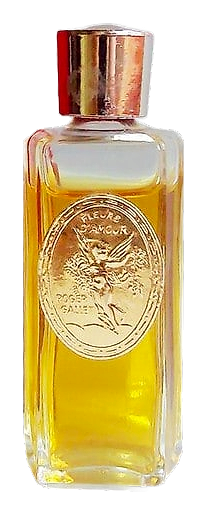
Fleurs d'Amour arrived in 1902 as Roger & Gallet's statement in the Belle Époque perfume vocabulary. The name itself, Flowers of Love, points to a romanticism the house had been building toward for decades. Where other houses were still working in simple colognes and single-flower waters, Roger & Gallet had the technical knowledge from their Farina inheritance to attempt something richer: an oriental floral that could hold its structure from first spray to last hour on skin. The perfumer working in that Paris laboratory understood what the era wanted. Belle Époque women wore violet powder on their cheeks and pinned rose petals into their hair. They carried handkerchiefs scented with orange blossom and moved through rooms trailing warmth. Fleurs d'Amour translated that ritual into liquid form, not a single flower, but the sensation of a woman who had applied several. Bergamot in the morning. A veil of rose at noon. Honey and ylang by evening.
The aldehydes in Fleurs d'Amour deserve particular attention. They function as more than a bright opening, they act as a binding element across the entire structure. Aldehydes have a quality of lift and sparkle that keeps florals from becoming flat or discrete. Without them, the violet and lily of the valley would sit separately on the skin. With them, the florals merge into a single powdery surface that reads as one impression rather than a list of ingredients. The honey amplifies this effect. Rather than adding sweetness in the straightforward way a vanilla or benzoin would, honey integrates with the florals and aldehydes to create warmth that feels organic rather than constructed.
The evolution
The aldehydes hit first, bright, fizzing, like the air above a freshly poured glass of citrus water. This is the signature of the era, and Fleurs d'Amour delivers it without apology. For the first thirty minutes, bergamot, geranium, and a whisper of galbanum carry the composition. Clean, lifted, structured. Then the florals take over. Rose and violet arrive together, which is unusual, rose usually leads and violet follows. Here they arrive as a pair, with jasmine and ylang-ylang joining from below. The honey is present but not obvious; it works as a warmth rather than a sweetness. Carnation adds a faint spice. Orange blossom extends the citrus quality of the opening without repeating it. This is a rich, layered heart that rewards patience. The powder builds. As the florals settle, the aldehydic character deepens into something softer, violet absolute and lily of the valley creating a talcum-powder warmth that feels intimate rather than dated. The civet begins to show itself around the second hour: not confrontational, but present.
Cultural impact
Fleurs d'Amour occupies a specific position in the lineage of aldehydic florals that includes Guerlain Jicky (1889) and Chanel No. 5 (1921), compositions that defined an era of perfumery. For enthusiasts studying the history of fragrance, it serves as a reference point for how animalic materials and powdery florals were balanced before reformulation became standard. The aldehydic structure makes it immediately recognizable to those familiar with the genre, while the particular combination of powder and animalics tends to divide opinion, a draw for collectors, a deterrent for those preferring modern florals.