The Story
Why it exists.
The beginning
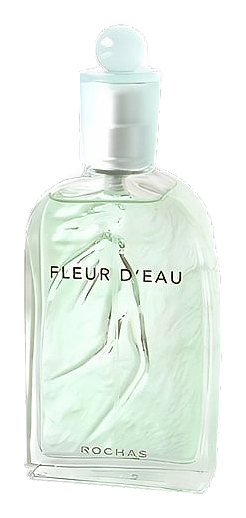
In the mid-90s, perfumer Sylvie Fischer reached for something the market had quietly forgotten, stillness. The decade before had been all declaration: power notes, loud sillage, fragrance as statement. Fleur d'Eau pushed in the opposite direction. The name says it plainly: a flower on water. It was an answer to excess, built on restraint. Fischer composed around aquatic florals, lotus, water hyacinth, with a green freshness that read more like atmosphere than perfume. Melon and apricot gave it juiciness without weight. The result smelled like a garden after rain, not a garden you were walking into. Rochas gave Fischer the space to make something quiet in a decade that was finally ready to listen.
What makes Fleur d'Eau structurally unusual is the sheer number of florals in the heart, six, counting lily of the valley, mimosa, heliotrope, and rose alongside the aquatic notes. Most fragrances pick a dominant floral identity. This one layers them like sediment: each one present, none dominating. The lotus and water hyacinth don't just add aquatic character, they modulate the entire heart, keeping the rose from reading sweet and the mimosa from going too powdery. It's a balancing act that depends entirely on proportion. Vetiver in the base is also notable here.
The evolution
It opens bright. Melon and apricot arrive clean and watery, with the blackcurrant adding a slight tartness that keeps the fruit from reading as sweet. This phase is brief, 15 to 20 minutes, but it's the hook. Then the florals take over. The transition is smooth, almost imperceptible: the fruitiness fades, and lotus, water hyacinth, and lily of the valley move forward. This is the longest phase, holding for two to three hours as the green and ozonic qualities deepen. By hour three, the base arrives quietly. Sandalwood and amber give it warmth, but vetiver keeps things grounded and slightly mineral. Heliotrope adds a final whisper of powder that settles close to the skin. On fabric, the drydown can last into the evening. On skin, it fades to skin scent around hour five, present for someone leaning in, gone for the room.
Cultural impact
Fleur d'Eau arrived at a moment when the culture was tired of being announced to. The minimalist aesthetic of the mid-90s, clean lines, reduced palettes, function over ornament, had finally reached fragrance. Where the 80s had demanded presence, the 90s asked for atmosphere. This scent answered that call by being everywhere and nowhere at once: present enough to notice, absent enough to ignore. It didn't try to compete with the room. It simply made the room better. The aquatic-floral genre it belongs to, alongside compositions like Eau d'Hermès and other quiet classics of the era, defined a generation of understated fragrance taste. Fleur d'Eau didn't get the cult following of some peers.