
The Story
Why it exists.
The beginning
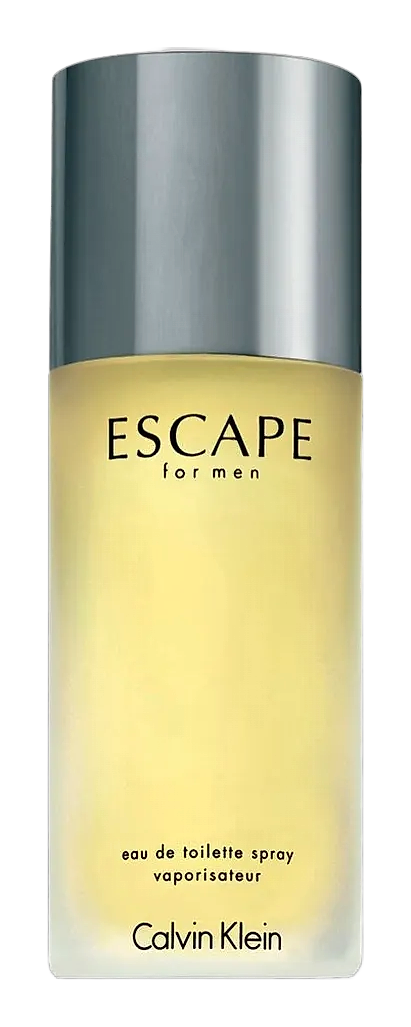
The name says everything. Escape arrived in 1991 from perfumer Jean-Marie Santantoni, not as an escape from something, but as an escape toward something. A vision of a woman who wanted to shed the elaborate, the heavy, the ceremony-heavy. Calvin Klein had built an empire on minimalism: clean lines, no excess, American confidence worn without apology. Escape the fragrance was that same philosophy applied to scent. No ornamentation. Just the essential. The result was a fragrance that felt like possibility, fresh air after a long season, the moment before something begins.
What makes Escape's structure interesting is its refusal to choose sides. The top is fruity, melon, apple, apricot, lychee, but it's cut with chamomile and marigold, herbal and slightly bitter, keeping the sweetness from getting soft. The heart piles on rose and jasmine and peach, genuinely romantic, but carnation and clove keep spice in the conversation. It's a fragrance that wants to be approachable but has opinions. The oakmoss throughout is the tell, that green, mineral, slightly earthy quality that gives Escape its backbone and its honesty. Not a transparent skin-scent. Not a heavy sillage monster. Something in between that reads as effortless because it refuses to commit to one register entirely.
The evolution
The opening hits fresh. Melon and apple, lychee's cool bite, cassia and mandarin lifting everything bright and immediate. Chamomile and marigold arrive quickly, that herbal, slightly medicinal counterpoint that prevents the fruit from reading as sweet or young. Two hours in, the heart takes over: peach, rose, jasmine, with carnation's spice warming the whole thing. This is where Escape becomes romantic. The oakmoss never fully disappears, it threads through, green and grounding, keeping the florals from going into full romantic mode. By hour four, the drydown settles into sandalwood and vanilla, amber's warmth, musk close to skin. Cedar and vetiver add a dry, woody finish that lingers into the evening. On fabric, the base notes can last until the next day. The sillage drops from strong to intimate after the first two hours, this is a fragrance that announces, then settles. A conversation starter that becomes a companion.
Cultural impact
Escape arrived in 1991 as part of Calvin Klein's strategy to position mass-market fragrances as legitimate luxury experiences. The brand's clean, minimal advertising aesthetic extended to the scent itself, which rejected the heavy, sillage-bomb fragrances popular at the time in favor of something lighter yet substantive. Escape found a devoted audience among consumers seeking sophisticated fragrance without intimidating presence. The fragrance also captured the early 1990s zeitgeist, a transitional moment between the excess of the 1980s and the understated confidence that would define the decade's later years.