The Story
Why it exists.
The beginning
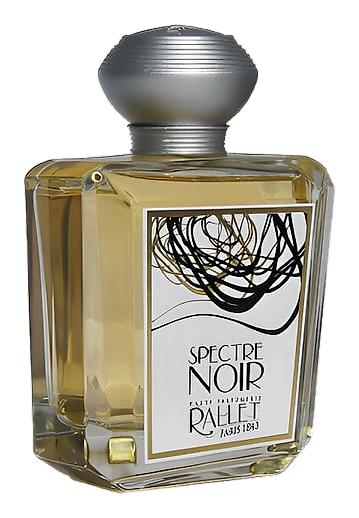
Spectre Noir arrived in 2013 from Rallet, a perfume house whose archive has been reopened for contemporary interpretation. The composition was created by perfumer Benoist Lapouza, and it works through the tension between brightness and depth, between something that greets you at the door and something that waits in the hallway. It is a study in contrasts, built around notes that pull in opposite directions and settle into something neither fully light nor fully shadow. The fragrance announces itself with a burst of citrus sharpened by pink pepper, then slides sideways into an herbal register most citrus compositions never visit, and finally grounds itself in leather, oakmoss, and resinous warmth. Spectre Noir doesn't announce its intentions. It simply unfolds, and you read it as it moves.
The structure of Spectre Noir moves deliberately between registers. The top layers several citrus notes, each slightly different in temperament, sharpened by pink pepper for that initial bite. Then the heart pulls sideways into an herbal territory that most citrus fragrances rarely approach. Tarragon and sage bring an almost apothecary quality, while elemi resin and cloves add the resinous warmth that bridges the opening to a leather and oakmoss drydown.
The evolution
The first ten minutes belong to citrus and pink pepper. Bright, sharp, almost aggressive in their clarity. This is the scent at arm's length, the version strangers catch as you pass. Then the herbs surface. Cloves arrive first, then sage, then tarragon with its faintly anise undertone. Elemi resin adds a piney lift that makes the heart feel alive rather than green. As the composition settles, it shifts into its final register: leather, oakmoss, patchouli, benzoin. Vetiver runs underneath, giving the base a smoky, earthy thread. The drydown is where Spectre Noir earns its name. What remains in the later hours is leather and oakmoss, a faint trace of vetiver, the ghost of benzoin's vanilla warmth. The fragrance becomes quieter as it ages, settling closer to the skin, and the citrus that opened it fades into a memory of brightness rather than a presence.
Cultural impact
Spectre Noir wears like a fragrance that knows what it wants to be. The herbal heart, specifically, is what sets it apart from a straightforward citrus-to-leather trajectory, because most compositions in that range skip the sage-and-tarragon step entirely. The result feels composed rather than aggressive, weighted more toward autumn than summer, closer to a wool coat than a linen shirt. The herbal pivot gives it a presence that doesn't imitate classical chypres but sits comfortably within their territory, drawing on a similar moss-and-resin vocabulary while carving out its own lane through the spiced, slightly medicinal middle phase.