
The Story
Why it exists.
The beginning
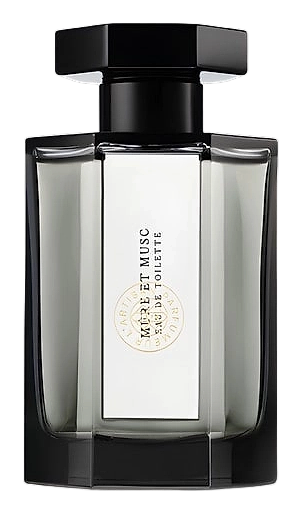
Mure et Musc emerged from a perfumer who believed in subtraction. Jean-Francois Laporte built this 1978 fragrance around a single synthetic accord, blackberry and musk, nearly alone on the pyramid. No elaborate construction, no supporting cast of fifty notes. Just the two. The house had just opened in Paris, and Laporte was making a quiet statement: that a niche fragrance could be defined by restraint, not complexity. The name says everything it needs to. Mure for the blackberry. Musc for the musk. Nothing else required.
What makes Mure et Musc structurally unusual is that Laporte centered one component and let it lead. Most fragrances distribute weight across the pyramid, top for opening, heart for duration, base for depth. Here, blackberry doesn't wait for the heart to arrive. It announces itself almost immediately, riding on citrus and basil that open sharp and green, then yielding almost at once to the sweet fruit. The musk doesn't compete. It supports. This is a fragrance where the star note never hides, never plays coy. For a perfumer to make that choice in 1978, when complexity signaled quality, was a deliberate artistic position. It worked because the blackberry itself is compelling, ripe without rot, sweet without syrup.
The evolution
The opening hits bright and herbal. Lavender and basil together create something almost medicinal, the smell of crushed leaves on a warm afternoon. Citrus cuts through, sharp and clean. Then, within minutes, the blackberry takes over completely. The hand-off is immediate, no graceful transition, just a clean pivot to sweet fruit. Jasmine flutters underneath, barely there, keeping the blackberry from becoming confection. By hour two, the musk arrives, soft, warm, skin-close. Oakmoss and patchouli anchor the drydown into something earthy and grounded. Six hours later on skin, the musk lingers. On fabric, longer. The blackberry is gone but its sweetness has left a memory in the musk.
Cultural impact
Mure et Musc became the house's signature not because it chased a trend, but because it defined one. Laporte's decision to center a single synthetic accord, blackberry and musk, was unconventional in 1978, when complexity signaled quality. The fragrance proved that restraint could be its own kind of ambition. It remains in the collection nearly five decades later, cited as a reference point for how minimalism functions in niche perfumery.