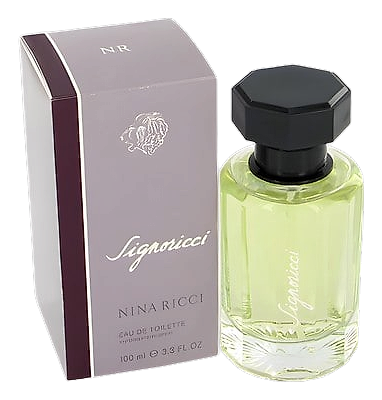

The Story
Why it exists.
The beginning
Signoricci arrived in 1965, composed by Michel Hy for Nina Ricci. The name itself is a play on the house, two syllables that carry the full weight of Parisian elegance. Where L'Air du Temps owned the feminine canon, Signoricci was the house's answer to the modern man: someone who wanted refinement without ceremony, presence without performance. Hy reached for the citrus-fresh, green-aromatic vocabulary that was reshaping masculine fragrance in the mid-60s, translating Nina Ricci's romantic sensibility into something with edges.
What sets Signoricci apart is its fougère architecture. The classic fern-inspired accord, built on lavender, coumarin, and oakmoss, had defined masculine perfumery since the 1890s. Hy didn't abandon that structure. He refreshed it. The galbanum and green notes push against the fougère backbone, creating a tension between crisp herbal sharpness and warm animalic depth. It's this push-pull that gives Signoricci its distinct character: modern enough to feel current, grounded enough to feel timeless.
The evolution
The opening hits sharp, lemon, bergamot, and galbanum cutting through with an almost medicinal freshness. Petitgrain adds a slightly bitter, woody edge that keeps it from feeling too clean. Within twenty minutes, the heart takes over: lily of the valley and rose bring a soft floral sweetness that tempers the citrus, while carnation adds a touch of warmth. The drydown is where it earns its age. Oakmoss and vetiver settle into an earthy, slightly bitter base. Cedar and amber provide structure. Civet lingers, subtle, animalic, the kind of presence that reads as skin, not perfume. Moderate sillage means it stays close, intimate, present for hours without ever announcing itself to the room.
Cultural impact
Signoricci belongs to a specific moment in masculine fragrance history: the mid-1960s, when the bold oriental structures of earlier decades were giving way to something more restrained, more aromatic, more modern. It sits at the intersection of the traditional chypre and the emerging aromatic fougère that would dominate the 1970s. What makes it notable is that it didn't abandon the classic structure, oakmoss, civet, warmth, to get there. It kept the depth while sharpening the surface. That balance is what gives Signoricci its particular character: a fragrance that reads as contemporary without having sacrificed the richness that makes older chypres worth returning to.