The Story
Why it exists.
The beginning
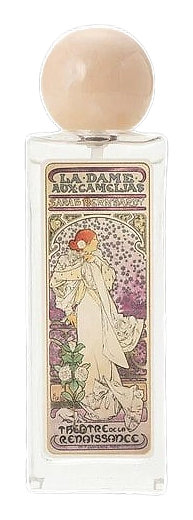
Camellias draws its inspiration directly from one of Alphonse Mucha's most beloved subjects, rooted in his celebrated poster 'La Traviata.' The camellia, with its layered petals and sculptural symmetry, served as a focal bloom within that composition, rendered in Mucha's signature ornamental style. Mucha's poster work captured flowers with an almost botanical precision, elevating individual blooms into icons of decorative art. The composition pairs the camellia's creamy, almost waxy sweetness with iris, another bloom the artist depicted with visible frequency across his body of work, creating a floral portrait rather than a literal botanical recreation.
What's interesting here is the structural choice. Ylang-ylang takes the lead instead of the more common rose or peony, giving the composition a tropical, buttery warmth that sits underneath rather than announces itself. Then lavender arrives at the heart, an unexpected aromatic note that prevents the florals from collapsing into pure sweetness. The iris root adds that distinctive powdery, slightly mineral dryness, the kind of facet that makes the whole composition feel considered rather than decorative. Sandalwood and tonka in the base keep things grounded and creamy without slipping into gourmand territory. It's a careful balance of soft and dry, sweet and powdered, floral and almost fougère-like.
The evolution
The first thirty minutes are all ylang-ylang and citrus doing their thing. Bergamot adds a clean brightness while mandarin gives it a juicier edge, but the ylang-ylang quickly takes command with its banana-skin warmth and custard-like depth. It smells tropical and golden, almost edible, before the lavender cuts through around the forty-minute mark. That herbal, slightly medicinal note shifts the whole character. The sweetness pulls back and something more architectural takes over. Iris arrives as a cool, powdery veil, lending the composition a suede-like quality. It never goes fully gourmand. The powder keeps it elevated. By the two-hour mark, sandalwood and tonka bean have settled into something creamy and close. The musk emerges as a skin-like softness, almost imperceptible on its own, but it's what makes the fragrance feel like it's part of you rather than sitting on top. The drydown lasts well into the next morning on fabric, reading as a soft, warm, slightly sweet woodiness that's more suggestion than statement.
Cultural impact
Camellias fits naturally into a growing appreciation for florals that don't announce themselves. This is a composition that prizes subtlety, the kind of scent that stays close to the skin and reveals itself gradually rather than demanding attention from across a room. The opening carries a cool, petal-like freshness, almost watery in its clarity, before settling into the creamier, more substantial character of the camellia itself. There's an inherent confidence in this kind of restraint, a sense that the fragrance doesn't need volume to make its presence felt.