The Story
Why it exists.
The beginning
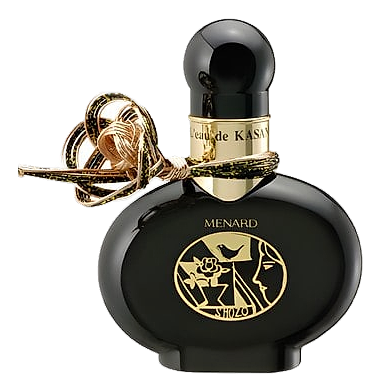
In 2004, Menard marked its 45th anniversary with a fragrance that could only come from Japan. Shuji Suzuki, tasked with the composition, looked at the brief and made a decision that still surprises: the scent would not announce itself. It would accumulate. The name, Kasane-ka, the Japanese phrase for layered scent, became both instruction and philosophy. Suzuki built it from the inside out, stacking notes so that each phase of wearing would reveal something the previous hour had hidden. The bottle, designed by artist Shozo Shimada, arrived as a visual counterpart: geometric, restrained, deliberately understated. The two disciplines, visual art and olfactory composition, shared one language. Neither rushed.
What makes the structure unusual is the gap between what announces and what remains. The opening, bergamot, orange, ginger, cardamom, is clean and immediate. Within minutes, the Hamanasu rose takes over, and this is where the fragrance earns its name. The Japanese rose carries a specific tartness that most Western rose absolutes lack, a green-peachy note that sits between floral and something almost fruity. It anchors the heart, which brings in heliotrope and carnation, and here the powder accord becomes the story. The combination of heliotrope's almond-iris softness with carnation's clove-like spice creates a middle phase that is warm without being sweet, floral without being delicate.
The evolution
The first hour belongs to the spices. Ginger opens sharp and clean, spice without fire, the kind that wakes the senses rather than overwhelms them. Cardamom and nutmeg arrive behind it, warm and resinous. The citrus notes (bergamot, orange) do not compete; they circulate air through the composition, keeping everything moving. Then the hand-off. Around the 45-minute mark, the Hamanasu rose asserts itself, and the character shifts from spiced brightness to something more interior, more intimate. Heliotrope joins the rose and the carnation adds its clove warmth, and for the next two to three hours, the fragrance lives in this powdery floral space that feels entirely distinct from the opening. By hour four, the florals begin their slow exit. Cedar and sandalwood arrive first, woody and smooth, followed by the vanilla that softens everything that came before. Vetiver keeps the base grounded. Ambrette, musk mallow, adds a quiet animal warmth that is never loud, never dirty, just present.
Cultural impact
Menard's approach to fragrance has always been different from Western houses, the pursuit of beauty as a layered, interior experience rather than a bold first impression. L'eau de Kasaneka reflects this philosophy directly: it rewards the wearer who pays attention rather than the one who needs to be noticed. In the context of oriental florals from the early 2000s, it stood apart by refusing the obvious warmth of vanilla-heavy constructions in favor of something spiced and green, with powder that arrives on its own terms. Those who found it tended to find it late, long after the bottle was discontinued from most retail.