
Heritage
A house, in its own words
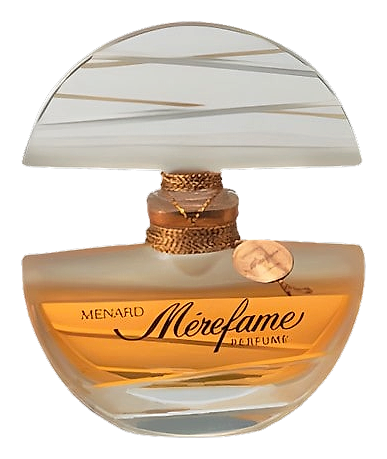
Menard traces its origins to 1959 Japan, when Daisuke Nonogawa established the company with a clear mission: the pursuit of true beauty. Rather than simply creating cosmetic products, Nonogawa built Menard around a philosophy that positioned beauty as a holistic concept, linking physical appearance with inner well-being and spiritual harmony. This foundation distinguished Menard from other Japanese cosmetics companies of the postwar era, many of which focused primarily on Western-inspired beauty standards. Throughout the 1960s and 1970s, Menard expanded its research capabilities while maintaining its distinctive approach to beauty, which drew from traditional Japanese concepts of balance and understated elegance. The company began developing fragrances during this period, with Mérefame emerging in 1979 as one of its earliest signature scents. This founding era established patterns that would define Menard's fragrance identity for decades: an emphasis on careful research, a preference for nuanced rather than bold compositions, and an enduring connection to Japanese cultural identity. The company continued operating from Japan throughout subsequent decades, developing its fragrance line alongside its core cosmetics business and establishing itself as a respected niche presence in Japanese perfumery. The guiding principle behind Menard's approach to fragrance creation is encapsulated in the phrase "Seeking True Beauty" (Shin Bi), a philosophy articulated by founder Daisuke Nonogawa that has remained central to the brand's identity since its establishment. This concept extends beyond surface aesthetics to encompass a more comprehensive understanding of beauty that includes emotional resonance, spiritual depth, and harmony with one's natural environment. Menard's perfumers work within this framework, creating scents that aim to capture something essential about Japanese cultural experience rather than simply following international fragrance trends. The brand resists the ostentatious or overpowering in favor of compositions that reveal their complexity gradually, mirroring Japanese aesthetic values of subtlety and suggestion. This philosophical foundation influences not only the olfactory character of Menard's fragrances but also the creative process itself, which prioritizes thoughtful development over rapid market response. The influence of traditional Japanese concepts such as wabi-sabi (finding beauty in imperfection) and mono no aware (awareness of impermanence) can be detected in how Menard's fragrances evolve on the skin and how the brand presents its creations to the world.