
The Story
Why it exists.
The beginning
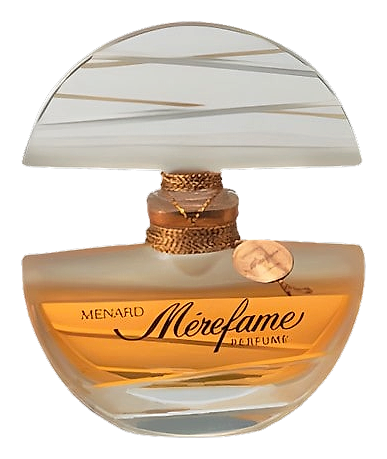
Guy Robert created Mérefame in 1979 with Menard, the Japanese house built on the philosophy of Shin Bi, seeking true beauty. Not beauty as decoration, but as a state of being. Robert understood the assignment. He built this as a chypre, which means it plays a long game: the citrus top is the opening argument, not the conclusion. The Japanese concept of ma, the meaningful pause between things, is embedded in how Mérefame moves. It doesn't announce. It arrives and then stays.
White florals are inherently paradoxical. Jasmine is warm, almost animalic. Gardenia is creamy but also green, that slightly vegetable quality that makes it smell like the flower itself, not a perfumer's interpretation. The combination creates a heart that is simultaneously familiar and strange. The iris in the base is what separates this from a standard floral. Iris doesn't smell like flowers, it smells like the powder on the skin of someone who has been wearing flowers all day. That's the payoff here. The drydown is where Mérefame becomes itself.
The evolution
The opening is cool citrus and aldehydic rose, bergamot brightens, ylang-ylang softens, and the rose has an almost metallic quality that catches attention without asking for it. Forty-five minutes in, gardenia takes over. The lactonic waxy quality blooms against jasmine's warmth, and patchouli's earthiness keeps both from floating away entirely. By hour two, the florals recede, but iris emerges. Powdery, slightly violet, distinctly itself. Sandalwood and vanilla arrive to soften everything further. The drydown on skin lasts most of the day. On fabric, it lingers into the next morning. That's the Mérefame secret: the top notes get you in the door, but the base is why you open the bottle again.
Cultural impact
Mérefame occupies an unusual position: a Japanese house with a French perfumer creating a distinctly Western chypre in 1979, when the fragrance world was transitioning from heavyorientals to something lighter. The combination of powdery iris, warm sandalwood, and green gardenia creates something that feels both historical and oddly modern. It is not a safe blind buy. But for someone who responds to powdery florals, it is one of the more interesting paths less traveled.